The Rise of Sensory Wellness: Data-Backed Calm Through Light, Sound, Scent, and Heat
A new lens on “wellness”: it’s not just what you do—it’s what you sense
Wellness has long been framed as habits: movement, nutrition, sleep, mindfulness. But there’s another lever hiding in plain sight: sensory input.
Light, sound, scent, temperature, texture, and even “scale” (being surrounded by something bigger than you) can shift how we feel—sometimes fast. Not as magic. As biology.
When our senses are intentionally guided, our nervous system often follows: attention narrows, breathing slows, muscles soften, mood lifts. Research across music, nature exposure, aromatherapy, and light therapy consistently points in the same direction: sensory environments can influence stress, anxiety, and emotional state.
And lately, I’ve been seeing this “sensory wellness” trend show up in places people don’t traditionally label as wellness destinations….most notably: Las Vegas.
1) What does the data actually say?
Sensory pathway #1: Sound (music) can reduce anxiety and improve wellbeing
Music isn’t just “nice.” In clinical research, music therapy interventions show measurable reductions in anxiety, across dozens of studies.
Even broader reviews (including music-based interventions) find benefits for emotional distress and wellbeing outcomes.
Why it matters for hospitality/wellness: sound is one of the easiest “high-impact / low-capex” sensory levers—if it’s curated with intention (tempo, rhythm, predictability, volume, and choice).
Sensory pathway #2: Smell (aromatherapy) shows real effects—especially with lavender
Multiple systematic reviews and meta-analyses have found lavender-associated interventions can reduce stress/anxiety (with variation by study design and delivery method).
Why it matters: scent is memory, emotion, and place branding rolled into one. Used well, it becomes an anchor: “when I smell this, my body knows it’s safe to exhale.”
Sensory pathway #3: Light affects circadian rhythm, sleep, and mood
Light exposure is one of the strongest signals your brain uses to set circadian timing. Expert consensus papers emphasize that when and how we’re exposed to light influences sleep and health.
Bright light therapy has strong evidence for seasonal affective disorder and growing evidence beyond it (with nuance depending on population and protocol).
Why it matters: hotels obsess over thread count but often ignore lighting as a wellness tool. Circadian-friendly lighting is a guest-experience upgrade that quietly impacts everything.
Sensory pathway #4: Heat (sauna / whole-body warming) may improve mood
Whole-body hyperthermia has been studied as a non-pharmacological approach for depressive symptoms, including a notable randomized clinical trial showing symptom improvement over follow-up.
More recent clinical research continues to explore heat as a supportive modality.
Why it matters: heat is a sensory “full reset” because it’s embodied—you can’t half-experience it.
Sensory pathway #5: Multisensory environments can amplify the effect
When multiple senses work together (sound + touch, or nature visuals + nature sounds), studies suggest emotional regulation benefits can be stronger than single-sense inputs alone.
This is the backbone of what I’m calling immersive sensory wellness: the whole environment becomes the treatment.
2) Vegas made it obvious: a city built on immersion is accidentally building a wellness blueprint
Vegas is known for spectacle. But spectacle is… sensory design at scale. And when that sensory design is done well, it can feel surprisingly regulating.
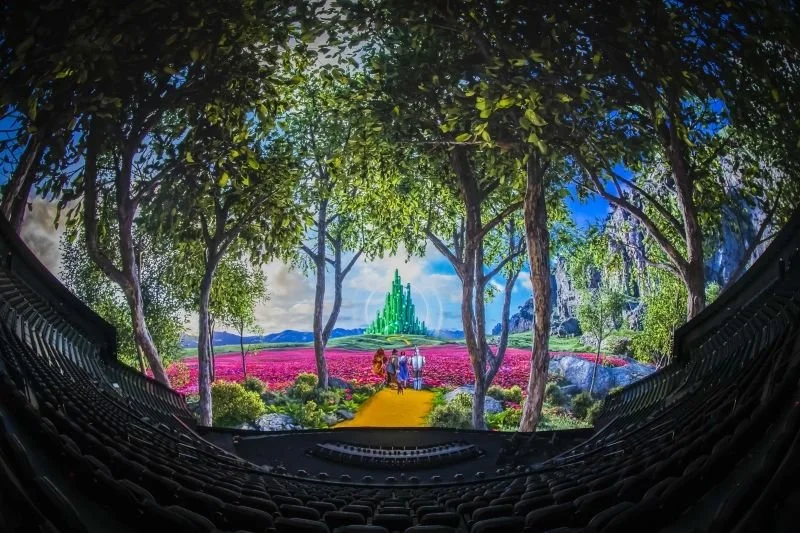
Example 1: The Wizard of Oz at Sphere — awe as a nervous-system shift
Sphere’s whole premise is total immersion—wraparound visuals plus environmental effects. The official Sphere materials describe The Wizard of Oz at Sphere as a fully immersive experience.
What I felt: that “awe” moment—your brain stops juggling 97 tabs, because it can’t. You’re fully there. For some people, that’s energizing. For others (me included), it can be oddly calming: attention becomes single-pointed.
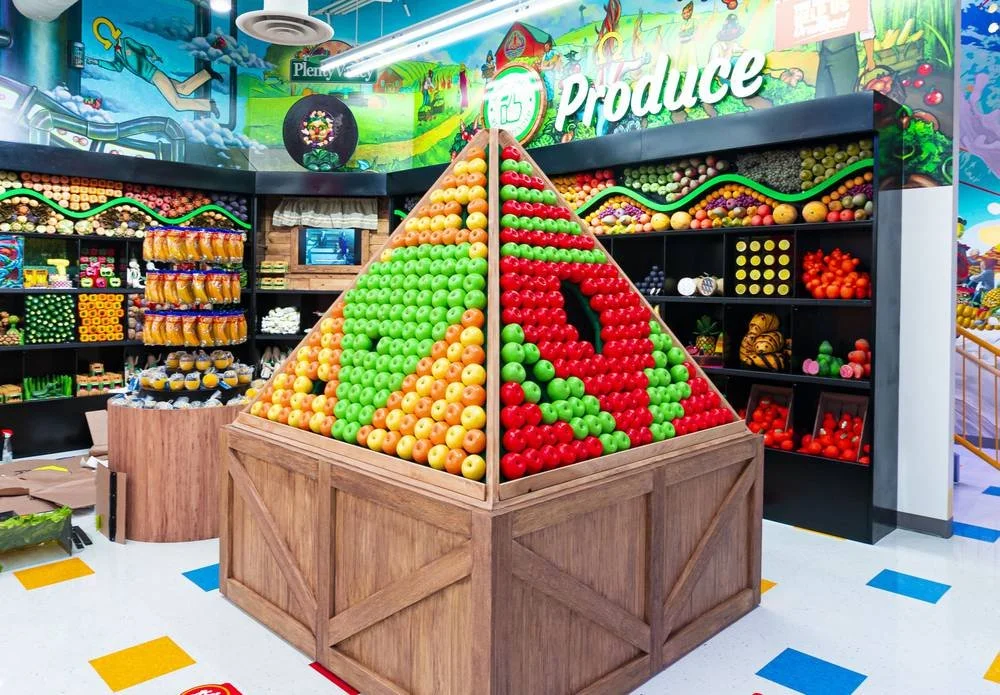
Example 2: Meow Wolf’s Omega Mart — playful disorientation (and why it can be restorative)
Meow Wolf’s Omega Mart is an interactive immersive art experience at AREA15—designed to pull you through strange rooms, unexpected color, light, and sound.
It’s not “spa calm.” It’s curiosity calm—the kind that reminds your nervous system it’s allowed to play.
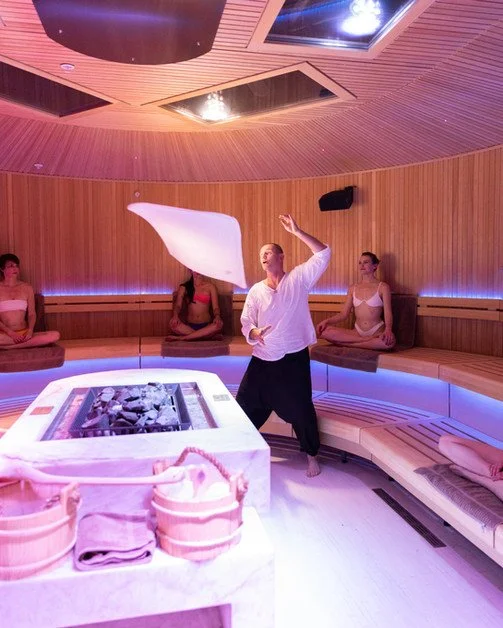
Example 3: Awana Spa’s event sauna — sauna as theater (Aufguss)
Awana Spa at Resorts World describes its theater-inspired heated room: aromatherapy, choreographed music, lighting, and the Art of Aufguss.
Industry coverage even calls out the theater-style lighting and sound system inside the event sauna.
This is the point: it’s no longer “just a sauna.” It’s a multi-sensory ritual—and that ritual structure is a huge part of why experiences feel more regulating than random wellness add-ons.
Example 4: The “light system chair” experience — micro-dose sensory regulation
I don’t need a brand name to make the point: when you sit in a chair that guides light + stillness + (often) sound or vibration, it becomes a nervous-system cue: pause here.
This is exactly where hotels, conferences, airports, and lounges are heading: small sensory interventions that create fast, repeatable calm.
What I’m watching next: Dubai’s Lush Spa and the rise of “sensory-first” treatments
Lush’s Synaesthesia massage is explicitly designed as multi-sensory—incorporating light, color, scent, and taste as part of the experience.
That’s the thesis in a single treatment: these touches make it more than a massage because they recruit multiple sensory pathways at once.
So what does this mean for hotels, spas, and retreats?
If you’re building wellness experiences (or selling them), here’s the practical takeaway:
“Wellness beyond the spa” is often sensory design
Not everyone will book a 90-minute massage. But everyone is affected by:
lighting and darkness
soundscapes (and noise)
scent cues
temperature transitions
textures and tactile comfort
visual scale + beauty (awe)
ritual (beginning / middle / end)
A simple framework: the Sensory Menu (stealable for hotels + retreats)
Offer guests a choose-your-reset menu, like:
CALM: warm lighting + slower music + grounding scent + heat + tea ritual
LIFT: brighter morning light + upbeat playlist + citrus scent + cold rinse
FOCUS: low visual clutter + steady sound + cool temp + tactile “work-ready” setup
SLEEP: dim amber light + quiet + scent off (or ultra-light) + cool room + blackout
This is also how you turn wellness into ROI: you’re not selling “a massage.” You’re selling “a better state of mind”—packaged, repeatable, and measurable.
Closing: Vegas didn’t feel like “wellness”—and that’s why this matters
My Vegas takeaway surprised me: the city most associated with stimulation showed me the next frontier of wellness.
Not wellness as restriction. Wellness as intentional sensory immersion—the kind that can calm us, lift us, reset us, and remind us how good it feels to be fully present.
And with experiences like Sphere, Omega Mart, sauna theater rituals at Awana, and multi-sensory spa treatments like Lush’s Synaesthesia, I’m convinced: sensory wellness isn’t a trend. It’s the missing layer.
