
Your Hotel Spa Is Leaving Money on the Table: How to Build a Wellness Revenue Engine in 2026
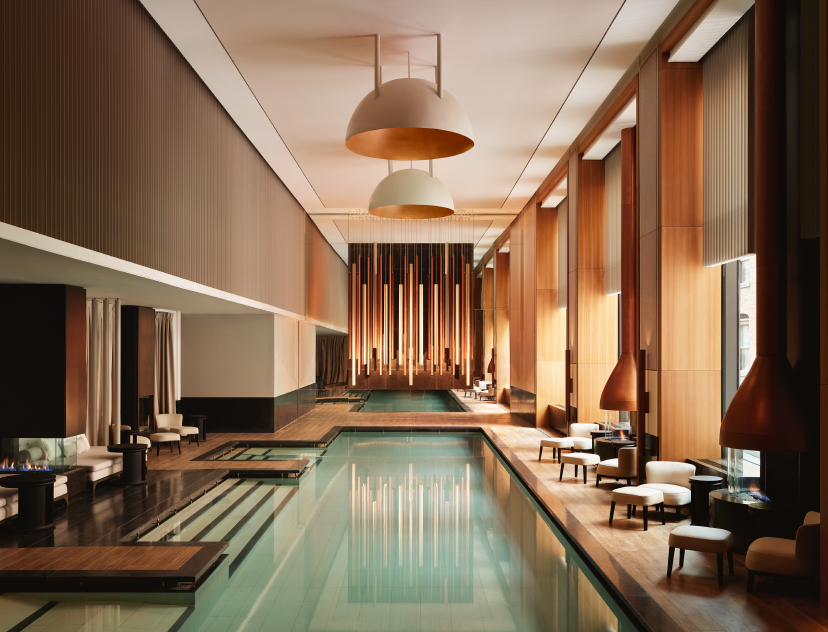
Most hotel spas capture somewhere between 8 and 12 percent of total guest spending. Properties that have repositioned wellness as an integrated revenue strategy are capturing 25 to 35 percent through programming, packages, memberships, retail, and extended stays. Based on our client audits, that gap represents the single largest untapped revenue opportunity sitting inside most boutique and independent hotel properties right now.
The global wellness economy is valued at $6.8 trillion according to the Global Wellness Institute, and it is expanding at rates that make traditional hospitality revenue streams look stagnant. Your guests are spending on wellness. The question is whether they are spending it at your property or somewhere else. As I wrote recently in HOTELS Magazine, much of this demand is flowing through channels hotels are not even connected to, with the wellness retreat segment alone valued at roughly $226 billion in 2024. Most hotel spas are still operating on a model that has not meaningfully changed since the 1990s: passive treatment rooms, hour-long massages priced per session, and amenities positioned as perks rather than profit centers. In 2026, when wellness is table stakes for any serious boutique or independent hotel, that model is costing you real money.
Why the Traditional Hotel Spa Model Is Struggling
The problem is not that guests do not want wellness. The problem is that they want a fundamentally different kind of wellness than what most hotel spas are set up to deliver.
Traditional spas operate on a transactional model. A guest books a treatment, receives a service, pays, and leaves. The experience is isolated, clinical, and finite. Revenue is capped by treatment room capacity, therapist availability, and the number of hours in a day. When you audit a property operating this way, you consistently find underutilized spaces outside peak hours, low treatment attach rates among overnight guests, and spa revenue that barely covers operational costs. We walk through exactly how a strategic wellness audit works for boutique properties if you want to see that process in detail.)
The wellness traveler in 2026 is seeking something fundamentally different: transformational wellness. These guests are not looking for an isolated massage. They want integrated experiences that shift how they feel, move, sleep, and think during their entire stay. They want programming, not just treatments, and outcomes, not just relaxation. They are also willing to pay significantly more for properties that deliver on that promise.
When we work with hotels to audit their wellness revenue strategy, the gap between these two models becomes obvious within the first week. The properties on the lower end of that spectrum are not failing because guests do not want wellness. They are failing because the way their spa is structured cannot capture the spending that wellness-motivated guests are ready and willing to do. Closing that gap is foundational to a property's financial performance.
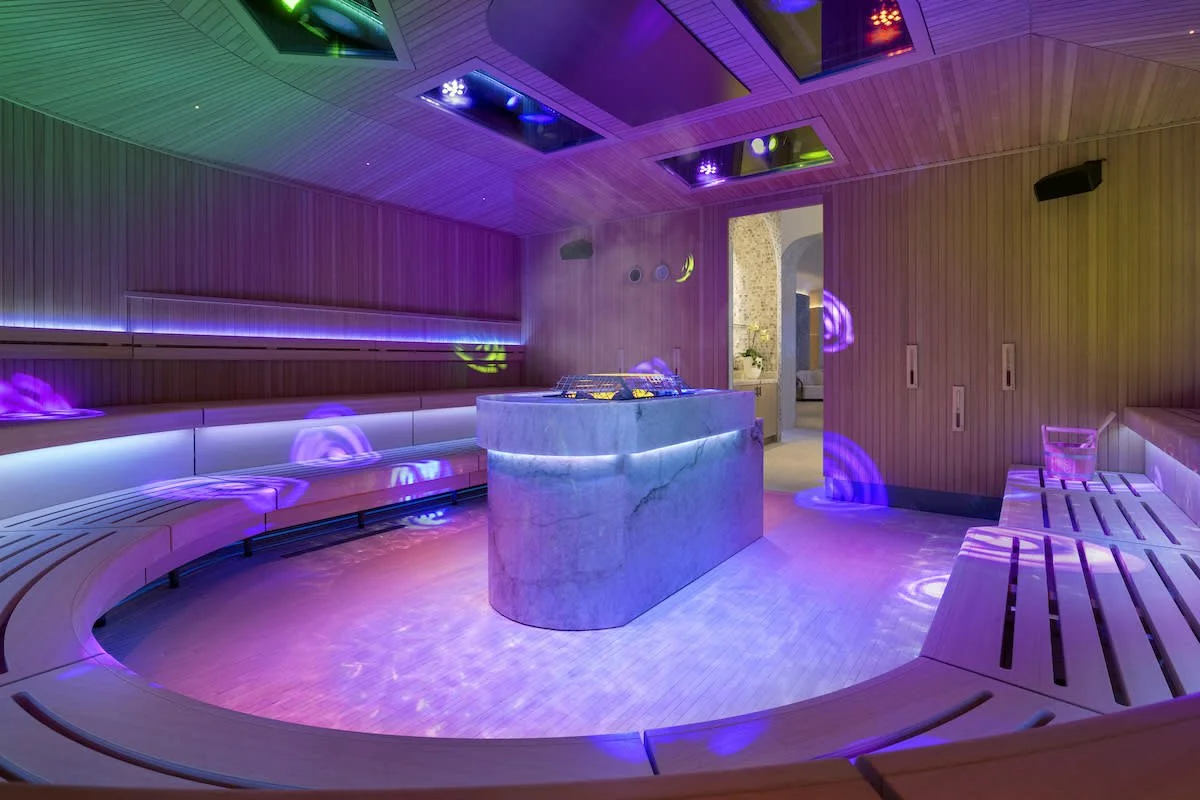
Awana Spa at Resorts World
The Shift: From Treatment Rooms to Wellness Ecosystems
The hotels winning in 2026 are repositioning their spas as experiential wellness ecosystems rather than service delivery centers. This means designing spaces and programming where water, light, sound, movement, and nutrition interact to create measurable shifts in guest well-being.
Consider what this looks like in practice. Instead of a spa menu listing 45-minute and 90-minute massage options, you offer curated wellness journeys. A three-day "Reset and Restore" package might include contrast hydrotherapy, personalized movement coaching, sleep optimization consultations, and chef-guided nutrition sessions. The guest is not booking treatments. They are booking transformation.
The revenue model changes completely under this approach. You are no longer constrained by how many massage tables you have. You are monetizing expertise, space utilization across different times of day, small group programming, and the integration of wellness into every guest touchpoint from check-in to checkout.l the difference.
Monetizing Wellness Beyond the Treatment Menu: Where the Revenue Opportunities Live
Here is where the hotel wellness program ROI actually materializes in 2026.
Longevity and Performance Programming
Longevity programming is the fastest-growing segment in hotel wellness right now. Guests are increasingly viewing wellness as a health investment rather than a luxury indulgence, and this shift in perception creates significant new revenue opportunities. Properties are integrating diagnostic equipment, consultation rooms, and advanced recovery technologies at the design phase. VO2 max testing, body composition analysis, and personalized longevity protocols command premium pricing because they deliver measurable health outcomes rather than subjective relaxation. When wellness moves from subjective experience to objective data, your pricing power shifts entirely.
Recovery Programming and Membership Models
Recovery programming is emerging as a distinct revenue stream that operates separately from traditional spa services. New membership models and premium private recovery suites designed for two to four guests are generating significantly higher rates than standard treatment rooms. These spaces combine contrast therapy (hot and cold immersion), breathwork coaching, assisted stretching, and compression therapy in thoughtfully designed environments that guests want to return to on a regular basis. A single well-designed recovery suite can generate more annual revenue than three traditional massage rooms because it supports memberships, day passes, and integration with fitness or adventure programming throughout the property.
Technology Integration for Hotel Wellness
Technology integration done right enhances both guest autonomy and your operational efficiency. Touchless technology for hygiene and personalization, robotic massage for precise therapeutic delivery, and digital wellness platforms that connect pre-arrival planning to post-departure follow-up create a seamless wellness journey. The key is deploying technology that enhances human connection rather than replacing it. Guests do not want a medicalized experience. They want elevated wellness that feels intuitive, personal, and grounded in genuine hospitality.
Community-Based Wellness Programming
Community-based wellness is where the real stickiness happens for boutique and independent hotels. The broader industry shift from exclusive luxury toward membership-based, community-focused wellness destinations emphasizes belonging over status. Properties that incorporate communal bathing experiences, group movement classes, shared meal rituals, and wellness programming that fosters genuine connection are seeing measurable returns in guest loyalty and lifetime value. This is not about creating Instagram moments. This is about creating reasons for guests to extend their stay, return quarterly, and bring their networks with them.
Your spa is no longer just a space under this model. It becomes a hub for an ongoing relationship with guests who see your property as their wellness home base.
Designing Integrated Wellness Guest Journeys
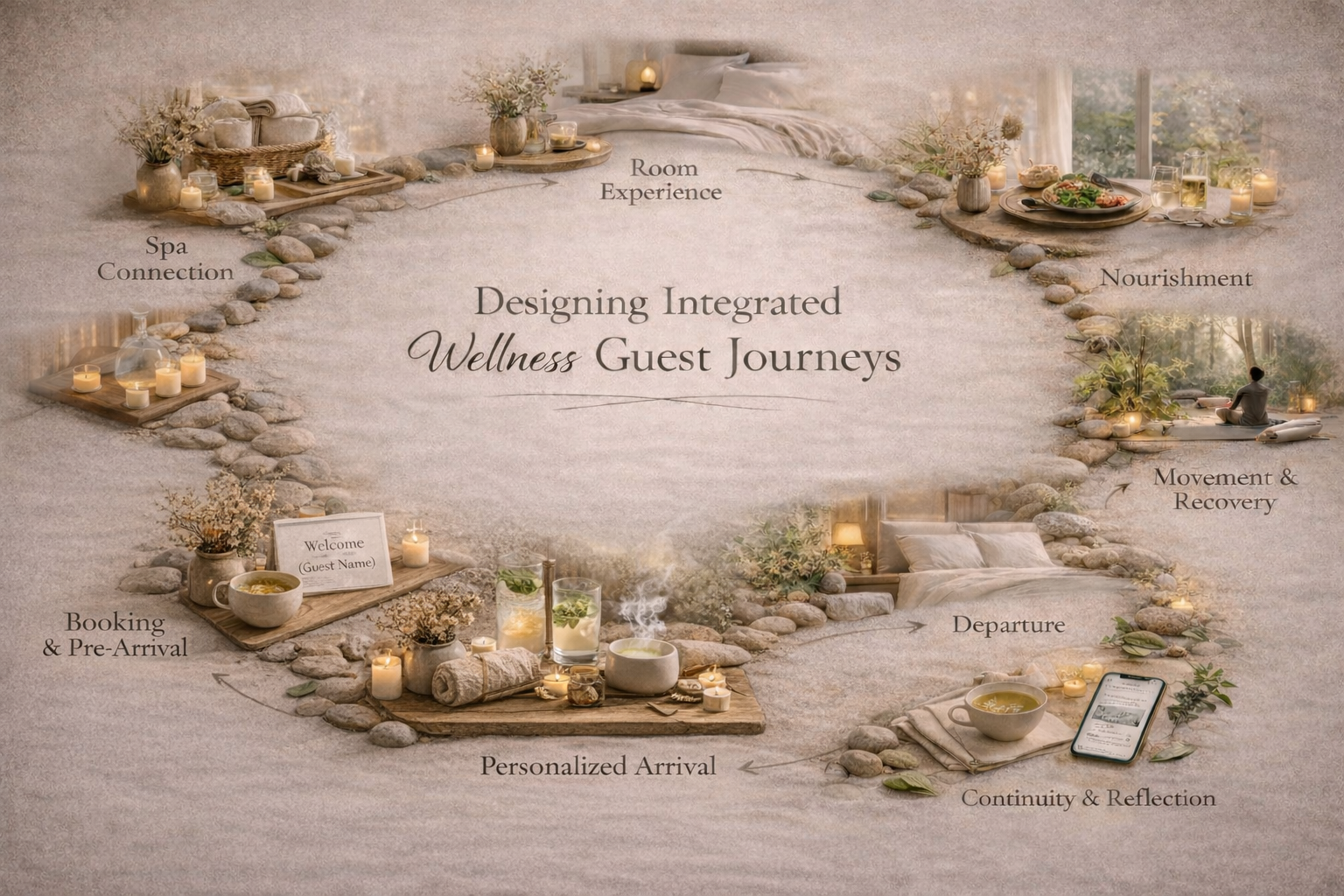
The most significant opportunity in wellness revenue strategy for hotels is integration. When wellness is isolated in a spa building at the edge of your property, it remains an amenity. When wellness is woven through every part of the guest journey, it becomes a revenue engine.
Start thinking about wellness programming that activates different parts of your property throughout the day. Morning movement classes on your lawn or rooftop. Midday recovery sessions in your pool area. Evening breathwork or sound bath experiences in underutilized meeting spaces. Nutrition-focused experiences in your restaurant that showcase local ingredients and teach guests skills they can take home.
This is also where partnering with vetted retreat facilitators can accelerate your programming without adding permanent headcount. Working with experienced facilitators who bring their own audience and expertise allows you to test new wellness offerings, fill shoulder-season gaps, and build programming credibility quickly while your property keeps operational costs lean. This is one of the things we do at Elevate: match hotels with the right facilitators for their brand and audience.
Properties successfully making this shift are also redesigning spaces to support acoustic wellness and biophilic design principles. Sound-absorbing architecture, organic materials, natural soundscapes, and soft furnishings create calm, restorative environments that justify premium rates across your entire property, not just in spa treatment rooms. When your lobby, guest rooms, and common areas all support nervous system regulation, you are not just offering a hotel wellness program. You are positioning your entire property as a wellness sanctuary.
This is exactly the kind of work we do with properties through our wellness revenue consulting. We audit how wellness currently shows up across your property, identify integration opportunities that require minimal capital expenditure, and build programming that drives both occupancy and ancillary revenue.
The Wellness Revenue Model for Hotels in 2026
Here is what this shift actually means for your bottom line. Properties implementing integrated wellness programming are seeing results that include:
20 to 30 percent increases in average daily rate for wellness-focused room packages
35 to 45 percent longer average length of stay for guests booking wellness journeys versus standard accommodations
40 to 60 percent higher food and beverage revenue per guest when nutrition is positioned as part of the wellness programming
New revenue streams from memberships, day passes, and local community programming that fill shoulder season gaps and reduce dependence on transient bookings
The hotels capturing the most wellness revenue in 2026 are treating spas not as cost centers that require subsidization, but as integrated wellness ecosystems offering diagnostic, therapeutic, social, and performance-based programming grounded in proven health outcomes.
You are not just selling relaxation at that point. You are selling measurable transformation. And transformation commands premium pricing.
Where to Start: Turning Your Hotel Spa into a Wellness Revenue Engine
If your spa currently operates as a traditional amenity, the shift to revenue engine does not require a complete property overhaul. It requires strategic repositioning of what you already have.
Start by auditing your current wellness touchpoints. Where does wellness show up in your guest journey beyond the spa menu? What underutilized spaces could host programming? What local wellness practitioners, retreat facilitators, or subject matter experts could you partner with to add credibility and programming variety without adding to your permanent payroll? What guest data do you already have about wellness preferences, booking patterns, and spending behaviors that could inform package development?
Then build one signature wellness journey as a proof of concept. Price it at a premium. Market it as a transformational experience rather than a service bundle. Track the metrics that matter: booking conversion, length of stay impact, ancillary spend per guest, guest feedback scores, and rebooking rates.
The properties that move first on this shift will capture market share from competitors still operating on the transactional spa model. The properties that wait will find themselves competing on price for an increasingly commoditized amenity.
Your spa is not dead. But the old model is. The question is whether you will lead the transformation or watch your competitors do it first.
Ready to explore what an integrated wellness revenue strategy looks like for your property? This is exactly what we help hotels design and implement through our Wellness ROI Audit and fractional commercial strategy. Let's talk about turning your spa from a cost center into your most profitable revenue stream.
