
The Retreat Venue Gap: Why Wellness Hotels & Retreat Centers Are Leaving Revenue on the Table
Travel in 2026 is not just about where people go. It is about who they become while they are there. When I launched Elevate Hospitality Collective, my focus was clear: providing fractional sales, commercial strategy, and wellness consulting for boutique hotels that want to lead the next era of travel. As we dive deeper into the wellness hospitality space, a startling pattern has emerged. Some of the most beautiful, experience-driven properties in the world are fundamentally underperforming.
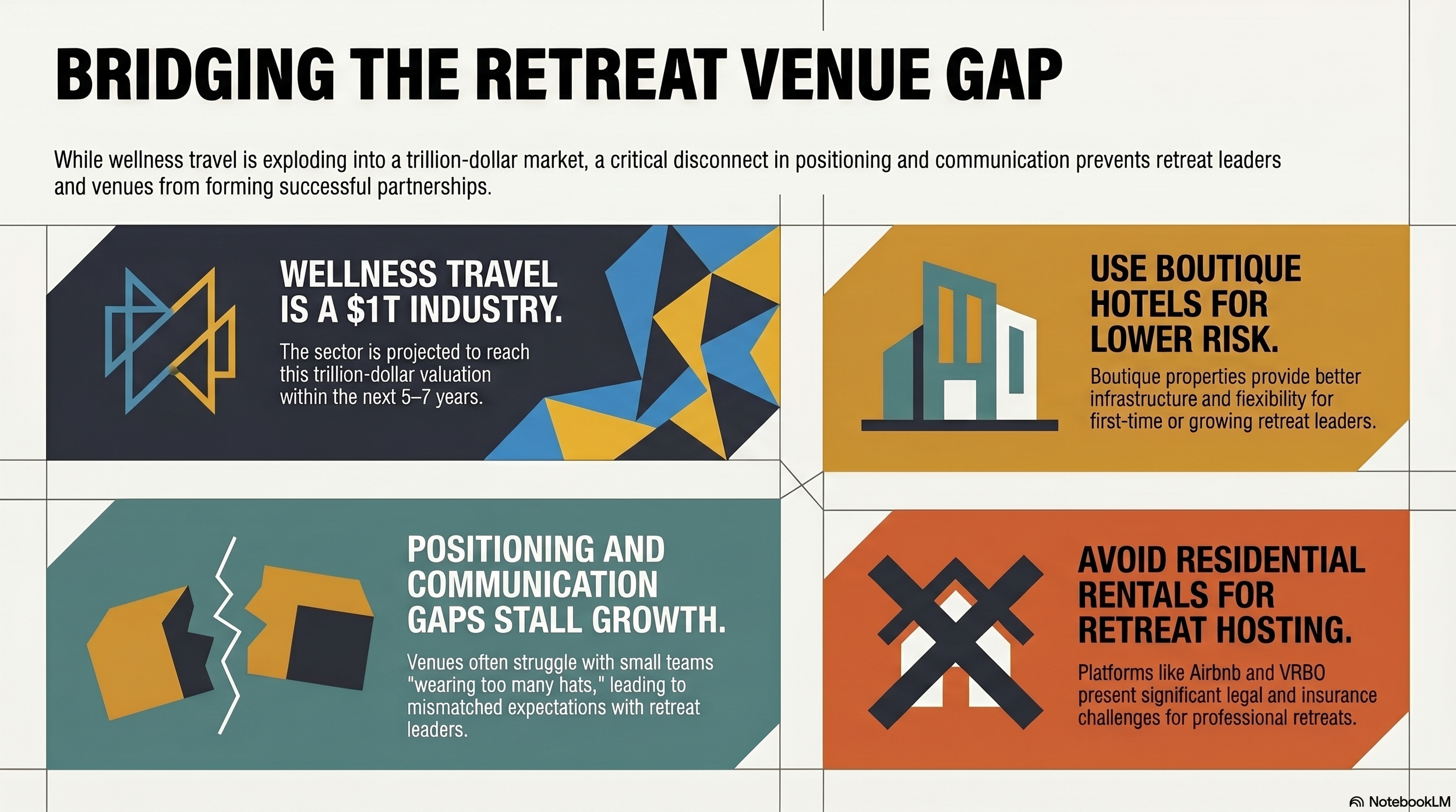
The problem is not a lack of demand. The wellness retreat segment was valued at roughly $226 billion in 2024, and the broader wellness travel sector is now projected to hit $1 trillion within the next 5 to 7 years. The picture is clear: demand is surging, and the next phase of growth will reward the operators who professionalize. People are desperate for transformation, connection, and restorative experiences. Yet, across the industry, there is a systemic disconnect between retreat leaders looking for the right space and venues struggling to fill their calendars. I call this the Retreat Venue Gap, and it is costing owners millions in missed revenue.
Defining the Retreat Venue Gap
The gap exists because wellness hospitality is operating on an outdated business model. Traditional hotels often treat wellness as an amenity rather than a core commercial driver. Meanwhile, independent retreat centers often focus so heavily on the "zen" or ‘woo woo’ that they neglect the "business."
If you own or operate a wellness-focused property, you are likely sitting on a goldmine of non-room revenue. International wellness travelers spend 41 percent more than standard travelers. Domestic wellness travelers spend a staggering 175 percent more. If your property is not capturing this premium, it is because your commercial engine is stalled. The gap usually comes down to one simple truth: you have a beautiful product but no proactive strategy to sell it.
Why Your Commercial Engine is Stalling
Most boutique hotels and retreat centers are operating without the foundational strategies that drive high-performance hospitality. We consistently see properties relying on passive inquiries or word-of-mouth marketing. In a competitive market, hope is not a sales strategy.
There are five common areas where retreat venues fall short:
No Defined Sales Pipeline: You are waiting for facilitators to find you instead of building a database of target leads.
Missing Pricing Architecture: Your rates are not aligned with seasonal demand or the specific needs of group buyouts.
Weak Outbound Strategy: You do not have a dedicated function to attract high-value corporate wellness groups.
The Too Many Hats Trap: Your general manager or founder is trying to handle sales, marketing, operations, and guest experience all at once, which means the commercial strategy is the first thing to get dropped.
Lack of Niche Clarity: You are trying to be everything to everyone instead of owning a specific segment of the wellness market.
This is where we often see trust leaksappear. When operational exhaustion sets in, follow-up slows down, proposals arrive late, policies stay vague, and the booking process feels uncertain. High-quality facilitators notice that immediately. They are not just buying a beautiful setting. They are buying confidence that you can help them deliver a seamless experience for their guests. If your systems feel improvised, the best leads quietly move on.
To fix this, you need a robust boutique hotel sales strategy that treats your wellness offerings as a primary revenue stream. This is where wellness tourism consulting, wellness strategy for hotels, and wellness revenue strategy for hotels become essential for scaling your impact and your profits.

The Rise of Corporate Wellness Retreats
One of the biggest growth drivers in the industry right now is the shift toward corporate wellness. Companies are actively moving away from stale boardrooms, traditional hotel meeting rooms, and sterile ballrooms. They are looking for experiential, wellness-focused venues and programmed experiences that foster genuine connection among their teams.
The corporate retreats market was valued at $31.8 billion in 2024 and is expected to more than double to $73.7 billion by 2034. This is a high-budget, high-opportunity segment that most retreat venues are not actively targeting. These groups do not just want a room block. They want a curated journey that includes mindful movement, communal dining, and restorative programming. If your property is not positioned to speak their language, they will book with your competitor who is.it stand out
Why Boutique Hotels Are a Secret Weapon for Retreat Leaders
Boutique hotels have a real advantage in this market, and most owners are not talking about it clearly enough. For retreat leaders, the best venues are not always the most remote or the most elaborate. They are often the most reliable. That is why boutique hotels can become a secret weapon.
The reason is simple: you already have turn-key infrastructure that retreat leaders desperately need.
That includes:
Contractual Infrastructure: You have established policies, payment terms, cancellation frameworks, rooming procedures, and documented expectations. That reduces confusion and gives facilitators something they can confidently sell to their community.
Operational Flexibility: You have established service standards, trained teams, housekeeping systems, food and beverage coordination, and on-property support. That makes it easier to customize an experience without reinventing the wheel each time.
Instead of presenting your property as just a beautiful backdrop, position it as a partnership platform. Retreat leaders want a venue that helps them look organized, protect their guest experience, and reduce risk. This is where the conversation shifts from a transactional mindset to a partnership-driven approach.
Strategic Warning: The Legal Minefield on Residential Platforms
Not every venue that looks retreat-ready is commercially ready. This is where savvy operators can differentiate fast.
Residential platforms like Airbnb and VRBO may appear attractive to retreat leaders because they feel informal and easy to book. But for commercial retreat activity, they can create serious exposure. We consistently see a commercial liability gap when a property is marketed under residential terms but used for business purposes, ticketed events, hosted group programming, or facilitator-led retreats. In many cases, residential insurance policies can be voided by commercial use.
For retreat leaders, that is a major risk. For boutique hotels, it is a major positioning advantage.
If your venue has proper contracts, commercial protections, and operating standards, say so clearly. You are not just selling rooms. You are selling legitimacy, safety, and peace of mind.
Moving from Passive Inquiries to Proactive Sales
The most successful venues are not waiting to be discovered. They are treating their property like a high-performance business rather than just a lifestyle concept. To close the Retreat Venue Gap, you must move from a reactive stance to a proactive commercial framework.
Just as importantly, you need to focus on positioning over marketing. Marketing amplifies what already exists. Positioning determines whether the right buyer trusts it, understands it, and wants it in the first place. If your offer, operational promise, and commercial story are unclear, more marketing simply sends more people into a weak funnel.
This is also why I believe in a sell before you open strategy whenever possible. If you are launching, renovating, repositioning, or adding a wellness concept, the goal is not to wait until the doors open and then hope demand appears. The goal is to build a robust commercial plan, define your segments, secure early bookings, and create qualified demand before launch. Savvy operators know that pre-opening sales is not optional. It is risk reduction.
Instead of waiting for an email to hit your inbox, you should be:
Actively reaching out to retreat facilitators and wellness influencers who align with your brand.
Building long-term partnerships with corporate travel planners who specialize in wellness.
Developing a retreat center marketing strategy that highlights your property as a turn-key solution for leaders.
Optimizing your website conversion to ensure that group leads are captured and nurtured immediately.
Building a commercial plan that supports pre-opening demand, strategic partnerships, and secured group business.
You can learn more about how to structure these systems in our guide on what a fractional commercial leader actually does for boutique hotels.
The Truth: Wellness Needs a Commercial Framework
Many venue owners worry that focusing too much on "sales" will dilute the soul of their wellness mission. In reality, the opposite is true. A strong wellness retreat business strategy provides the financial stability needed to invest in better guest experiences, higher-quality staff, and more impactful programming.
What actually drives performance in 2026 is a blend of visionary hospitality and rigorous revenue management. This includes strategic positioning, a proactive sales pipeline, and revenue optimization across the entire guest journey. You are not just selling a bed. You are selling a transformation and, even more importantly, a trusted partnership. When you understand the ROI of wellness, you can justify premium pricing and drive consistent occupancy even during shoulder seasons.
The properties that win in this next chapter will be the ones that move beyond a transactional mindset. They will treat retreat leaders, facilitators, and corporate planners as long-term partners rather than one-off bookings. That shift changes everything. It sharpens how you package your offer, how you communicate your standards, and how confidently buyers can say yes.
We have developed a proven framework for non-room income that helps properties unlock these hidden revenue streams.
Featured Podcast: Bridging the Gap with Shannon Jamail
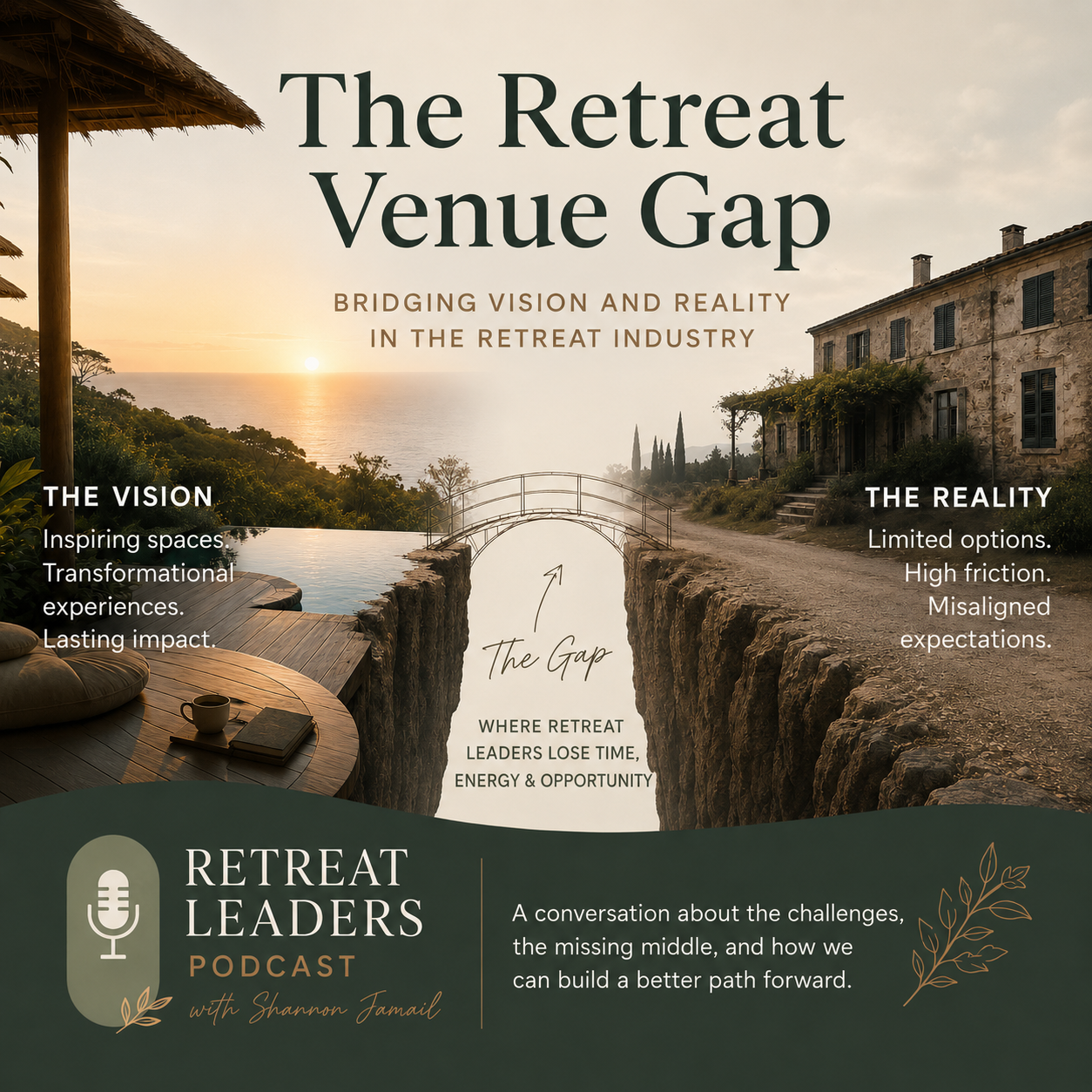
I recently had the pleasure of speaking with Shannon Jamail on The Retreat Leaders Podcast, which is ranked in the top 2 percent globally. We had an honest conversation about the disconnect between venue owners and retreat leaders. We discussed the biggest commercial mistakes owners are making, the strategies behind closing the Retreat Venue Gap, and how to build a strategy that actually drives bookings.
If you are a property owner or a retreat facilitator, this episode is a must-listen. We unpack the logistics of venue selection, the importance of clear communication, the hidden trust leaks that derail conversions, and why many venues are accidentally scaring away their best leads. These are the exact strategies and Retreat Venue Gap insights discussed on The Retreat Leaders Podcast.
Listen to the full episode on Spotify here: The Retreat Leaders Podcast with Emily Johnson
Claim Your Free Retreat Profitability Calculator
Are you curious about how much revenue you are actually leaving on the table? We want to help you visualize the potential of your property. We have created a Retreat Profitability Calculator that allows you to input your current numbers and see the impact of a proactive group sales strategy.
This tool is designed specifically for hospitality owners who want to move beyond guesswork and start making data-driven decisions. Whether you are looking to increase bookings at your retreat center or launch a new wellness wing at your hotel, this calculator is your starting point.
How Elevate Hospitality Collective Can Help
At Elevate, we do not just give advice. We partner with you to turn your wellness vision into a high-performing asset. We offer fractional hotel sales leadership and comprehensive hotel ROI wellness audits that identify exactly where you are losing money.
Our services include:
Commercial Strategy & Fractional Sales: We build and lead your sales function so you can focus on the guest experience.
Wellness ROI Audits: We evaluate your property from a commercial lens and identify missed opportunities for ancillary spend via a mystery shop.
Retreat & Group Positioning: We help you refine your story and niche to attract the highest-quality facilitators and corporate groups.
Pre-Opening & Sell Before You Open Strategy: We help you create the commercial foundation, partnerships, and booking pipeline needed before launch.
Trust Leak Identification: We assess where your inquiry flow, proposal process, policies, and operations may be undermining conversion.
Imagine having a full-scale commercial engine running behind the scenes, ensuring that your property is booked out with aligned, high-value guests year-round. That is the power of a strategic approach to wellness hospitality.
Let’s Close the Gap Together
If you are experiencing inconsistent bookings, empty dates you cannot seem to fill, or a feeling that your property should be performing better, you are probably right. There is usually a fixable commercial gap sitting right in front of you.
The question is: are you ready to stop being passive and start being proactive? The wellness market is moving fast, and the properties that invest in a real commercial framework today will be the leaders of tomorrow.
Ready to see what is possible?
👉 Book a Strategy Call with Emily
👉 Message to receive a free Retreat Profitability Calculator
👉 Explore our Wellness ROI Audit
