The Hotel Pilates Boom: Why Reformers Are a Revenue Line, Not an Amenity
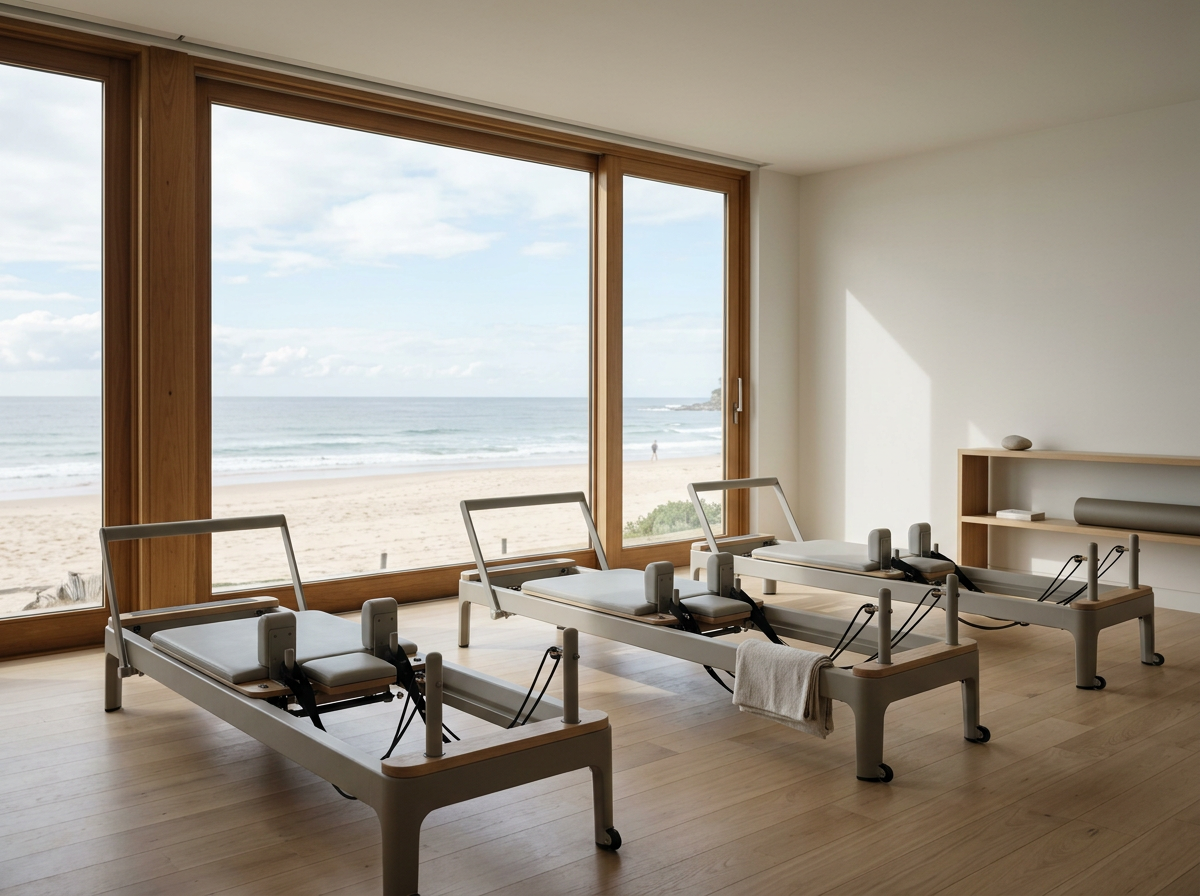
The hotel gym with premium equipment, citrus-infused water, apples, and protein bars is no longer a differentiator. It is the baseline.
In its October 7, 2026 feature, Vogue reports that reformer Pilates, once considered a niche practice, has become a sought-after hospitality offering. Hotels are adding studios, hiring specialist instructors, welcoming local residents, and developing Pilates retreats around established communities.
For hotel owners, the question is not whether reformers belong in the building. The question is whether they become an amenity cost line or a revenue line.
The properties getting this right have already answered.
The signal nobody is talking about is local demand
The most commercially important detail in Vogue’s reporting is not the number of luxury hotels adding reformers. It is the number of local residents showing up.
When The Ritz-Carlton Key Biscayne, Miami reopened after a $100-million revamp in December 2025, it introduced Tremble, a reformer Pilates franchise with locations across the United States, Canada, and the Dominican Republic. According to General Manager Derek Flint, classes have been extremely well received by both hotel guests and the local community. Weekend sessions have reached capacity and operated with a waitlist.
The St. Regis Chicago converted one of its group fitness studios into a dedicated reformer Pilates space, with views of the Chicago River, Navy Pier, and Lake Michigan. Kerri Stokes, the property’s Director of Wellness, told Vogue that interest has been so strong the hotel is looking to add more instructors.
That is not simply a successful amenity. It is demand outpacing supply. A hotel with a waiting list for a weekday-morning class has found something most wellness programs never find: a productive use for the building before check-in and after check-out.
For an independent hotel, the local membership model can unlock three revenue layers:
Membership and class-pack revenue: Residents create recurring demand that does not depend on room occupancy and does not cannibalize guest inventory.
A wider property funnel: A local member who first enters through Pilates can become an F&B customer, retail customer, event customer, or future overnight guest.
A defensible community moat: Equipment can be purchased by any competitor. A trusted instructor roster and an active local community are much harder to copy.
This is where reformer Pilates connects directly to relational wellness in hospitality. The value is not only in the machine or the movement. It is in the repeated human connection that forms around a consistent place and practice.
The Aster in Hollywood offers another useful model. Its reformer studio pairs high-tech apparatus with old-world dark wood and ornamental columns, creating a setting that feels more like a private members club than a conventional gym.
The members-club model and the hotel Pilates studio are converging. For an independent property with a small footprint, that may be the most natural place to begin.
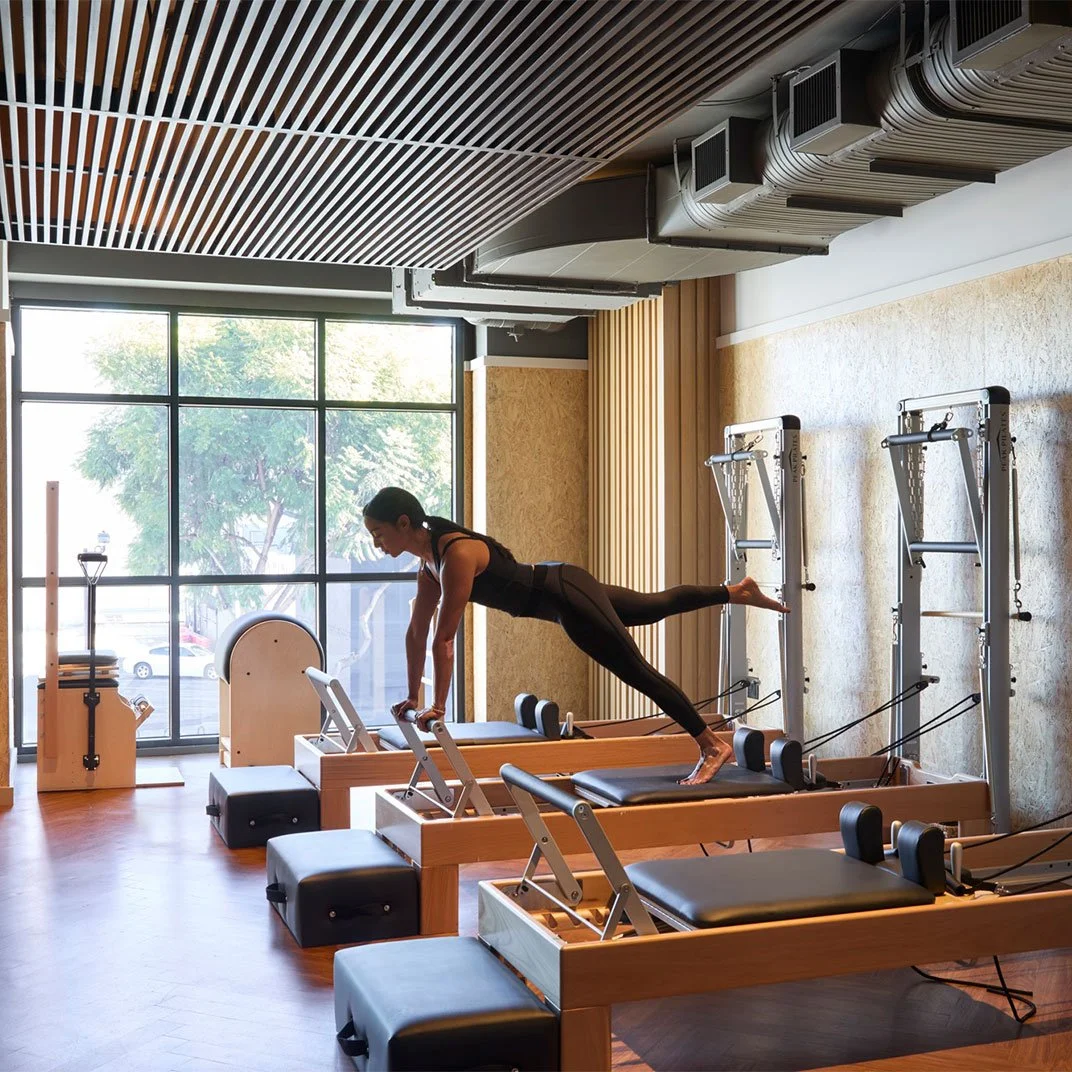
The strongest examples fall into three operating models. Your property may fit one, or it may evolve through all three.
1. The anchor studio
In this model, Pilates becomes a competitive-set differentiator and a distribution story.
Aman New York offers a private studio for bespoke sessions with two reformers, a Cadillac, a Pilates chair, and a barrel. Molitor Hotel & Spa Paris, a combined hotel and sports club near Roland Garros Stadium, opened a Pilates studio with Merrithew reformers in December 2025. Naples Beach Club, A Four Seasons Resort, opened with a Frame Pilates reformer studio in October 2025.
These properties are using movement infrastructure to communicate a clear promise before the guest even arrives. The studio supports premium positioning, direct-booking appeal, and a more complete wellness journey.
The Pilates studio at The Aster in Hollywood. Photo: Courtesy of The Aste
2. The community and membership model
Here, residents are deliberately part of the revenue mix. The Ritz-Carlton Key Biscayne and The Aster are obvious examples. Soho Farmhouse in the Cotswolds has featured a reformer studio in its Wellness Barn since 2024 and added tower Pilates classes in 2025.
This model works especially well in urban hotels, resort communities, and properties with a strong local identity. The goal is not to make every class complimentary. The goal is to create a carefully managed balance between guest access, paid local participation, private sessions, and membership value.
3. The retreat and programming model
This is the most relevant model for boutique hotels and retreat centers.
Acro Suites in Crete combines a reformer studio with local stone, light wood machines, and views of Mononaftis Bay. The property also hosts Pilates retreats. Konstantina Orfanaki, the property’s creative and development director, told Vogue that the hotel’s wellness philosophy grew from yoga and meditation into reformer Pilates as guest interest shifted toward mindful movement and longevity.
She also noted growing retreat interest from wellness communities and brands including Adanola, Reebok, and Puma.
Acro Suites is worth studying because it built the programming layer alongside the infrastructure. That is the sequence most independent properties should consider. You do not need to begin with a major capital project. You need to understand who will use the offering, what they will pay for, and which partners can bring demand.
Other properties are demonstrating the breadth of the opportunity. Amanyara in Turks & Caicos introduced reformer Pilates in collaboration with Erika Bloom. Four Seasons Resort Tamarindo built its studio into the property’s original wellness vision. Hôtel Lily of the Valley pairs reformer Pilates with cryotherapy, massage, and a heated outdoor pool.
The picture is clear. Reformers are becoming part of the wider recovery ecosystem, not a standalone piece of gym equipment.
The no-capex playbook for independent hotels
Not every hotel needs a dedicated Pilates studio.
Hotel Nesslerhof in Austria’s Grossarl Valley has five on-site reformers with screens for on-demand classes, but no separate Pilates room. Its Happiness Concierges can deliver a machine to a guest’s suite for private practice. The hotel is also introducing its Strong & Grounded Reformer Pilates Retreat, led by Sophie Markart.
The Balmoral, A Rocco Forte Hotel in Edinburgh, launched a “Reformer to Your Room” service using a foldable reformer delivered and removed by staff.
Both examples convert a fixed capital decision into a variable operating model. More importantly, they make the amenity bookable. If a guest can reserve a reformer for a specific time, it is inventory. If the session can be paired with an instructor, it becomes a package. If the experience can be paired with rooms, F&B, and a retreat leader, it becomes a group booking.
A practical 90-day test could look like this:
Identify two or three underused spaces in the building, such as a meeting room, studio, or quiet terrace.
Test one or two foldable reformers before committing to a permanent studio.
Partner with a qualified local instructor on a revenue-share arrangement.
Run one recurring class during a low-demand weekday period.
Add one question to the post-stay survey to measure interest, satisfaction, and willingness to book again.
Review class utilization, ancillary spend, guest feedback, local participation, and direct booking inquiries before expanding.
The asset may already be there. You may simply be using it for the wrong purpose.
Reformer Pilates is recovery hospitality, not just fitness
This is the reframe that matters.
Reformer Pilates is low impact, breath-led, controlled, and alignment-focused. It builds strength through precision rather than strain. It asks the participant to regulate breathing, focus attention, and move with control.
That places it squarely inside the emerging category of recovery hospitality. Our Post-Spa Era analysis explores why hotels are moving beyond traditional treatment rooms toward somatic suites and environments designed to change how guests feel. Our nervous system regulation playbook makes the commercial case for designing hospitality around regulation, restoration, and recovery.
A reformer studio that helps a traveler feel less physically compressed after a flight, sleep more deeply, and return to work with greater clarity is not merely a fitness amenity. It is part of the guest’s recovery journey.
Vogue notes that wellness travelers increasingly refuse to abandon their routines while away from home. The traveler who will not skip her practice is likely to book direct to guarantee access, pay a premium for a private session, and return to the hotel that understands her needs.
That is a demand change, not a fad.
The equipment will be copied. The community will not.
Reformer Pilates is already moving toward a franchise and brand-standard model. Tremble has locations across multiple markets, and hotel groups are beginning to make Pilates part of broader wellness positioning.
The reformer itself will become easier to copy.
What cannot be copied as easily is instructor quality, class consistency, thoughtful scheduling, and community trust.
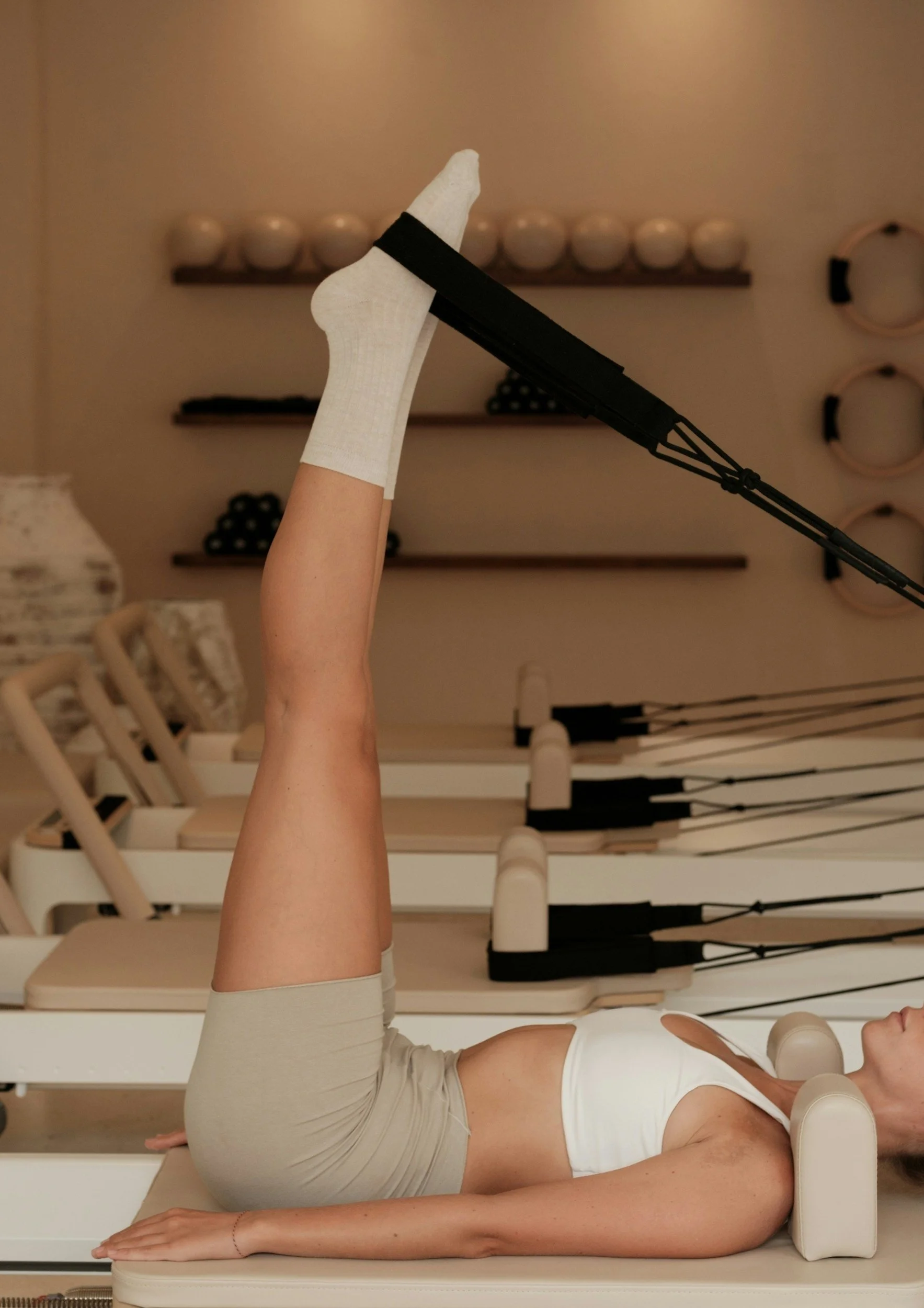
Have you ever worked in a hotel? The difficult part is not ordering the apparatus. It is making sure the studio is reset between classes, the instructor roster is staffed on the mornings that matter, engineering knows who services the equipment, the front desk can explain the booking process, and the concierge knows which guest wants a private session instead of a group class.
A Pilates studio that nobody signs up for is worse than no Pilates studio. It is a visible signal that the property misread its own demand.
Test before you commit.
What this means for the retreat business
Retreat leaders, coaches, and wellness practitioners are actively looking for venues with real movement infrastructure. The properties covered by Vogue are building precisely that.
For a hotel owner, hosting an outside Pilates retreat leader is one of the lowest-risk ways to test the model. The leader brings the audience and community. The property supplies the rooms, space, service, and F&B. You learn whether your market supports the programming before investing in a permanent studio. The opportunity is also becoming a partnership channel. Acro Suites’ relationships with wellness communities and activewear brands suggest that Pilates retreats can generate more than room nights. They can create sponsorships, brand collaborations, content opportunities, and repeat community travel.
A retreat leader may be your first membership channel. A Pilates brand may be your first group booking. A local class may be your first direct relationship with a future repeat guest.
Is your movement offering an amenity or a business?
The hotel Pilates boom is not really about reformers.
It is about whether you can turn an existing space, a trusted practitioner, and a clear guest need into a repeatable commercial experience.
The question is simple: is your movement offering an amenity you pay for, or a business you run?
A wellness ROI audit can help you identify where your property already has the space, demand, and audience for Pilates programming before you commit capital. Elevate Hospitality Collective helps independent hotels, retreat centers, and hospitality brands design wellness experiences that guests value and that operators can measure.
Explore Elevate Hospitality Collective to begin building a wellness strategy with commercial purpose.
Source: Vogue, “The Reformer Pilates Boom Has Officially Reached Hotels”
