The Future of Luxury: 5 Game-Changing Travel Trends Shaping 2026
Virtuoso 2026 Trends Decoded: What the $35B Luxury Travel Network's Data Means for Hotel Owners, Retreat Operators & Travel Advisors
Virtuoso’s $35 billion global network released its latest data during Virtuoso Travel Week, and the headlines focused on record sales. The more commercially useful story for hotel owners, retreat operators, and travel advisors is what those sales reveal about guest priorities.
Luxury travelers are booking fewer, longer, more intentional trips. They are shifting into fall, paying premium rates for measurable wellness outcomes, combining multiple countries in one itinerary, and looking for human judgment in a travel ecosystem increasingly shaped by artificial intelligence.
At Elevate Hospitality Collective, we interpret these signals through an operator’s lens. The question is not simply what is trending. The question is what your property can activate, package, sell, and measure now.
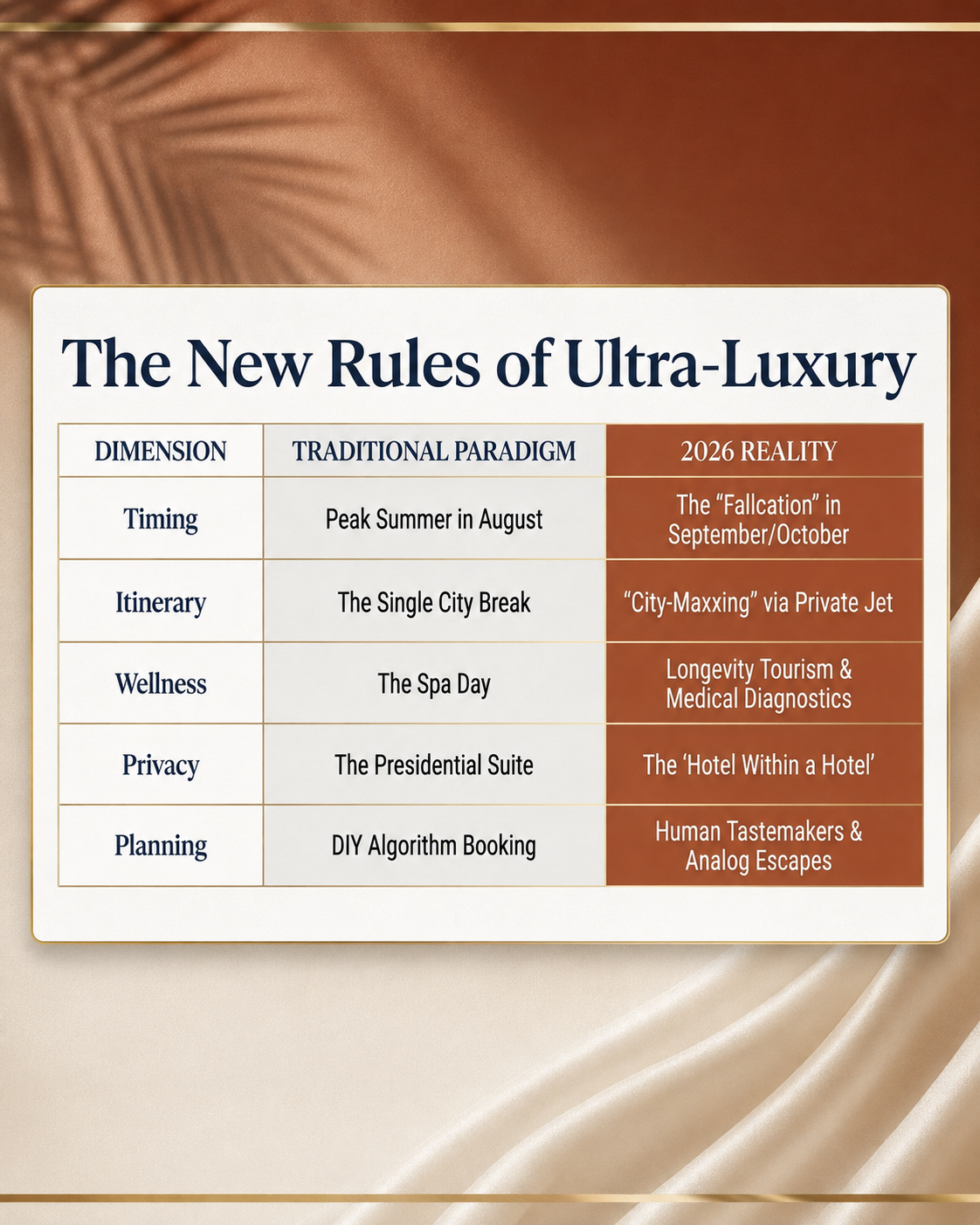
Market Snapshot: The 2026 Virtuoso Strategy Brief
Virtuoso’s 2026 data points to a luxury segment operating in a high-growth orbit:
System-wide sales are pacing 21% ahead of the previous year.
Hotel sales are leading at 24.5% growth.
Bookings for properties with an ADR above $1,500 are up 37%, growing at twice the rate of mid-tier luxury properties.
U.S. luxury hotel ADR has risen from $790 in 2019 to $1,445.
International luxury ADR has climbed from $985 to $1,653.
60% of clients are prioritizing bucket-list travel, while 30% are taking fewer, longer, higher-quality trips.
Fall 2026 bookings are up 59%, with sales up 69%.
September sales are up 77%, and September booking volume has reached 92% of August’s level, compared with 79% in 2023.
Wellness-focused property sales are up 44%, with rates up 23%.
Future leisure sales for trips booked one to two years ahead are up 50%.
The picture is clear: luxury demand is not disappearing. It is becoming more selective, more experience-led, and more willing to pay for relevance.
1. The Great Decoupling: Luxury Has Entered a High-Growth Orbit
The broader travel market is navigating economic uncertainty, fluctuating consumer confidence, and macroeconomic pressure. Luxury travel, however, is following a K-shaped trajectory. The upper tier is separating from the rest of the market because high-value travelers increasingly view exceptional experiences as a non-negotiable investment.
Virtuoso’s peak sales day illustrates this shift. Historically, January 31 was the high-water mark of Wave Season. In 2026, the consortium’s peak sales day moved to May 29, correlating with a dip in oil prices and a surge in the stock market.
That timing matters. It suggests that luxury consumers are responsive to wealth sentiment and market confidence, not just promotional calendars. They are also booking the assets they want before availability disappears.
For independent properties, this creates two opportunities:
Build products for high-intent travelers rather than competing for generalized demand.
Create longer lead-time sales strategies that place your property in consideration well before the trip.
A boutique hotel in Puglia, a coastal retreat in Maine, or a small wellness resort in Costa Rica cannot outspend a global chain. You can, however, own a sharper promise.
What this means for an independent property: Do not market your hotel as simply luxurious. Define the guest, the outcome, and the signature experience that justifies a premium ADR. Elevate Hospitality Collective helps owners translate existing assets into wellness-led positioning, packages, and demand-generation strategies.
2. Fall Is the New Summer: The Coolcation Becomes Commercial Reality
The most significant of the fall travel trends for 2026 is the reorganization of the travel calendar.
The “coolcation” has moved from an emerging preference to a strategic response to extreme heat, overcrowded destinations, and changing traveler expectations. Virtuoso reports that fall bookings are up 59%, fall sales are up 69%, and September sales are up 77%.
September is now reaching 92% of August’s booking volume, compared with 79% in 2023. The traditional shoulder season is no longer automatically a discount season. In many destinations, it is becoming Peak Fall, with higher rates and stronger guest intent.
The Mediterranean data is especially striking:
French Riviera fall ADR is up 179%.
Greek Isles fall ADR is up 131%.
Puglia fall ADR is up 78%.
This validates the shift we explored in our guide to coolcations and the 2026 wellness travel trend. Cooler weather is not only changing where travelers go. It is changing when they travel, how long they stay, and what they expect to do once they arrive.
For hotel owners, the commercial response should include:
Building September and October packages before competitors do.
Programming around hiking, sleep, thermal bathing, local food, and nature immersion.
Selling cooler months as the ideal time for restoration, not as a cheaper alternative.
Partnering with travel advisors early because future leisure demand is already extending one to two years out.
What this means for an independent property: Rebuild your annual calendar around multiple demand peaks. A fall retreat, harvest experience, or nature-based recovery stay can protect rate integrity while filling dates that previously depended on discounts. Elevate can help you design and commercialize a seasonal wellness calendar that aligns programming, operations, marketing, and revenue strategy.
3. City-Maxxing Creates Demand for Biological Restoration
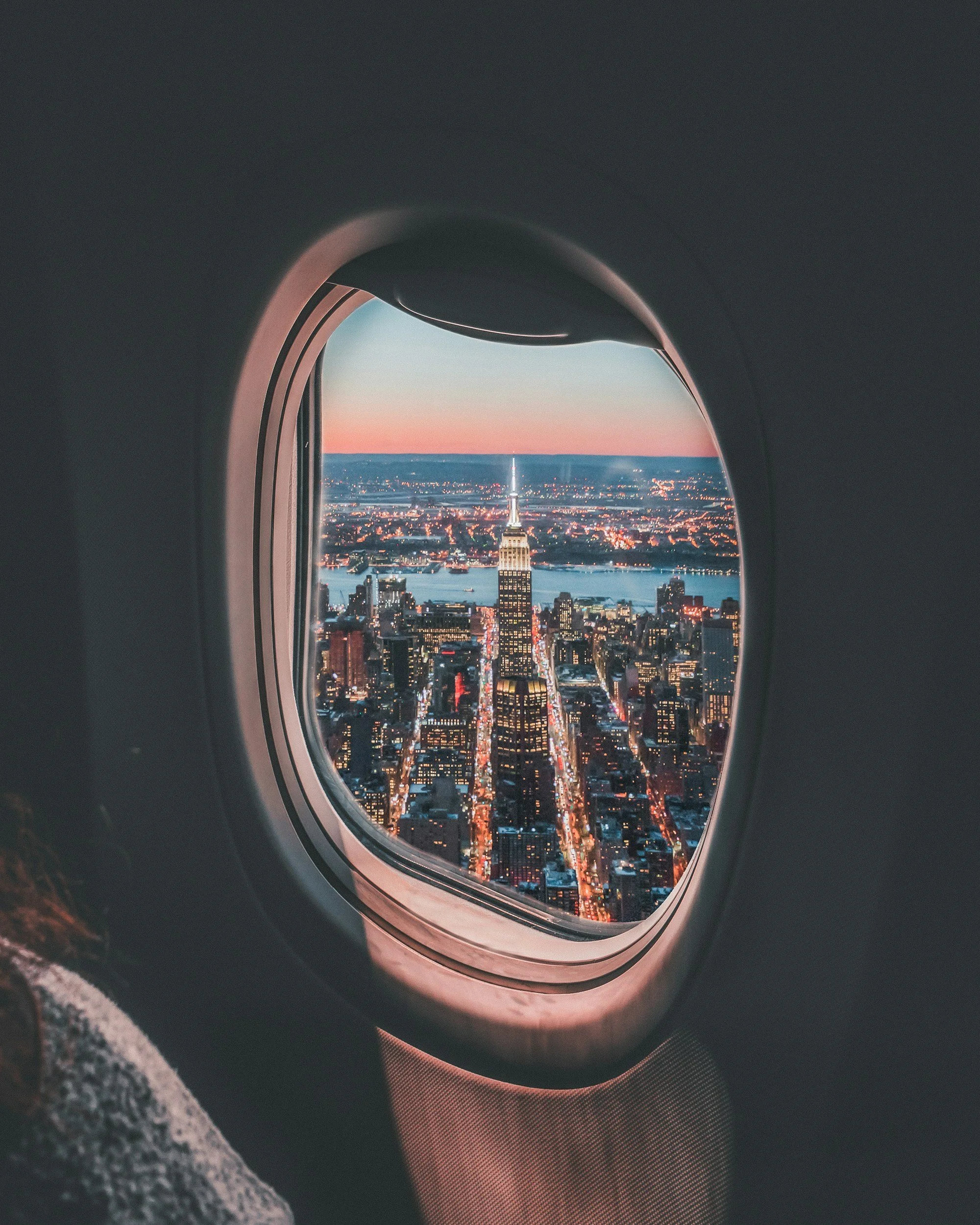
Luxury travelers are packing more into each trip. Virtuoso’s city-maxxing trend describes itineraries built around multiple global hubs, high-density cultural experiences, and efficient movement between destinations.
Italy appears in two out of every five multi-city itineraries. France and Italy are the most common country pairing, followed by Italy and Switzerland. Approximately 50% of these itineraries cross international borders, while private aviation requests from millennials are 6% above the global average.
This is not slow travel in the traditional sense. It is high-density travel with an increasing need for recovery between experiences.
A traveler may spend three nights moving through Rome, Florence, and Venice, followed by a private villa in Tuscany or a restorative retreat in the Dolomites. The more intense the itinerary becomes, the more valuable sleep, sensory calm, privacy, and nervous system regulation become.
This is where the post-spa era and somatic suites become commercially relevant. A somatic suite is not merely a room with a yoga mat. It is a guestroom designed around biological recovery through acoustic control, circadian lighting, tactile materials, sleep support, and carefully selected recovery tools.
For urban hotels, this might mean:
A quiet room category with blackout shades and sound masking.
In-room breathwork, tea, and analog rituals.
Compression boots or recovery tools available through a simple booking add-on.
A “City to Stillness” package that combines urban exploration with a structured recovery experience.
What this means for an independent property: High-density itineraries create demand for high-density restoration. Your room can become the recovery product, not just the place where guests sleep. Elevate helps properties identify the room, design, and programming opportunities that can drive a premium without requiring a new spa footprint.
3. City-Maxxing Creates Demand for Biological Restoration
Luxury travelers are packing more into each trip. Virtuoso’s city-maxxing trend describes itineraries built around multiple global hubs, high-density cultural experiences, and efficient movement between destinations.
Italy appears in two out of every five multi-city itineraries. France and Italy are the most common country pairing, followed by Italy and Switzerland. Approximately 50% of these itineraries cross international borders, while private aviation requests from millennials are 6% above the global average.
This is not slow travel in the traditional sense. It is high-density travel with an increasing need for recovery between experiences.
A traveler may spend three nights moving through Rome, Florence, and Venice, followed by a private villa in Tuscany or a restorative retreat in the Dolomites. The more intense the itinerary becomes, the more valuable sleep, sensory calm, privacy, and nervous system regulation become.
This is where the post-spa era and somatic suites become commercially relevant. A somatic suite is not merely a room with a yoga mat. It is a guestroom designed around biological recovery through acoustic control, circadian lighting, tactile materials, sleep support, and carefully selected recovery tools.
For urban hotels, this might mean:
A quiet room category with blackout shades and sound masking.
In-room breathwork, tea, and analog rituals.
Compression boots or recovery tools available through a simple booking add-on.
A “City to Stillness” package that combines urban exploration with a structured recovery experience.
What this means for an independent property: High-density itineraries create demand for high-density restoration. Your room can become the recovery product, not just the place where guests sleep. Elevate helps properties identify the room, design, and programming opportunities that can drive a premium without requiring a new spa footprint.
4. Longevity Tourism Is the Recovery Hospitality Thesis
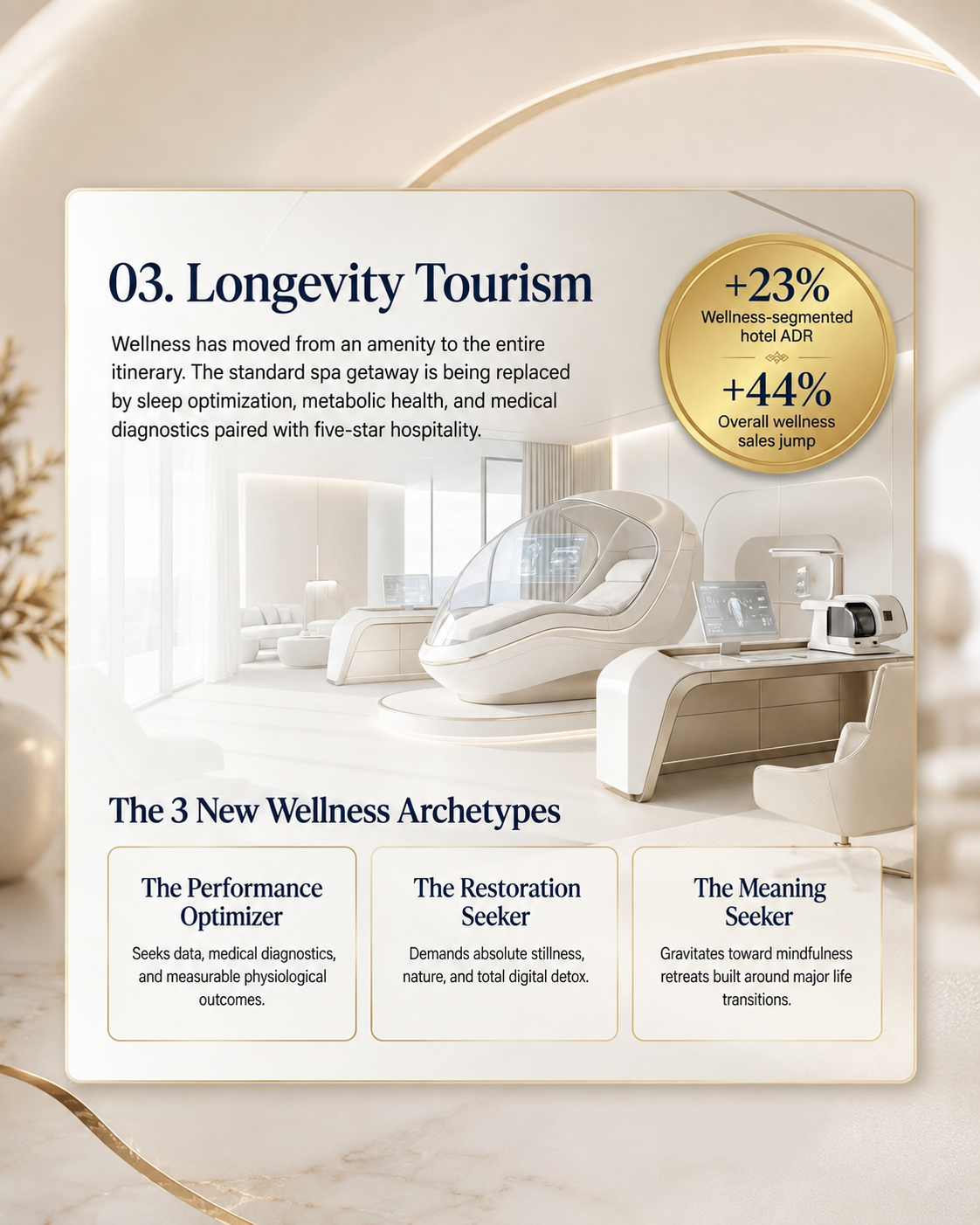
Virtuoso reports that wellness-focused properties are seeing sales growth of 44%, with rates up 23%. International ADR in this segment has reached an average of $1,653 per night.
This is longevity tourism moving beyond the traditional spa model. Guests want sleep optimization, metabolic health, diagnostics, movement, nutrition, mental clarity, and meaningful rest. They are willing to pay for what we call biological ROI.
Virtuoso’s three traveler profiles map directly to the guest segments behind our recovery hospitality and nervous system regulation playbook:
Performance Optimizers seek diagnostics, biohacking, sleep improvement, and measurable progress.
Restoration Seekers want nature, silence, digital disconnection, and relief from chronic overstimulation.
Meaning Seekers are drawn to retreats and experiences connected to transition, identity, purpose, and personal change.
These segments give hotel and retreat owners a more useful framework than the broad label “wellness traveler.” The guest seeking compression boots and HRV tracking may need a different product from the founder recovering from burnout or the traveler navigating menopause.
This is also where hyper-specific wellness niches become powerful. Boutique properties can build authority around one outcome for one guest, such as:
Midlife and menopause retreats.
Men’s longevity and performance stays.
Clinical burnout recovery.
Sleep-forward retreats.
Nervous system reset weekends.
Grief, transition, or post-burnout restoration.
The commercial opportunity is not to add more amenities. It is to create a coherent journey that can increase length of stay, ancillary spend, retreat demand, and repeat bookings.
That is the purpose of a wellness ROI audit. We look beyond whether a property has wellness features and evaluate whether those features are visible, bookable, priced, staffed, and connected to revenue.
What this means for an independent property: Wellness becomes a revenue engine when it is designed around a specific guest outcome. Elevate helps owners audit the guest journey, identify missed revenue, create signature experiences, and build programming that supports ADR, RevPAR, length of stay, and ancillary income.
5. The AI Paradox and the Human Renaissance
Virtuoso reports that 74% of luxury travel advisors use AI for back-office efficiency. At the same time, three in four clients prioritize an advisor’s destination expertise over digital tools.
That is the AI Paradox. Technology makes information easier to access, but it also makes generic recommendations easier to replicate. When every algorithm recommends the same villa, hotel, restaurant, and “hidden gem,” the value of human taste rises.
Travel advisors are not becoming less relevant. Their role is becoming more strategic. They provide context, judgment, relationships, access, and the confidence that a trip is right for the traveler, not merely popular online.
The same principle applies to hospitality consulting. One of Emily’s simplest litmus tests is: Have you ever worked in a hotel?
Operational experience matters because a strategy must survive contact with staffing, procurement, OS&E, guest flow, revenue meetings, service recovery, and the realities of a busy property. Hotel owners do not need another slide-deck generalist. They need a partner who understands how an idea becomes a sellable, deliverable guest experience.
What this means for an independent property: Human judgment is now part of the premium. Work with advisors and consultants who understand your destination, your guest, and your operational reality. Elevate Hospitality Collective brings an operator’s perspective to wellness strategy, hospitality consulting, retreats, and guest experience design.
6. From Sustainability to Stewardship
Virtuoso’s final signal is a shift from sustainability language toward stewardship.
Sustainability has become diluted. Stewardship is more active. It asks how a property protects the landscape, culture, labor, food systems, and local relationships that make the guest experience possible.
A farm stay that treats its land as a backdrop misses the opportunity. A farm stay that creates meaningful contact with soil, animals, food, and seasonal rhythms can become a true recovery destination. We explore that idea in From Barn to Breathe: Farm Stay Recovery Hospitality.
Hospitality is an art because it turns place into feeling. The most compelling luxury properties will not simply minimize their impact. They will actively care for the assets guests travel to experience.
What this means for an independent property: Stewardship can become part of your positioning, programming, and guest loyalty strategy. Elevate helps properties turn landscape, community, and local character into commercially viable experiences without stripping them of authenticity.

Conclusion: The Luxury Travel Ceiling Is Still Rising
Virtuoso’s 2026 data shows a luxury market with substantial room to grow. An estimated 89 new individuals cross the $30 million UHNWI threshold every day, and the UHNWI population is expanding seven times faster than the global average.
The opportunity is real, but it is not evenly distributed. Most hotels will continue adding generalized amenities and competing for the same traveler. Savvy operators will own a clearer outcome, open their calendars to fall demand, design for restoration, and use human expertise as a differentiator.
For hotel owners, retreat operators, and travel advisors, the strategic priorities are straightforward:
Plan for longer lead times and secure demand 12 to 18 months ahead.
Treat fall as a premium season, not an off-season.
Build recovery hospitality into rooms, food and beverage, programming, and service.
Create specific offers for Performance Optimizers, Restoration Seekers, and Meaning Seekers.
Replace generic wellness language with measurable, bookable outcomes.
Use AI to improve efficiency while protecting human taste and judgment.
Practice stewardship as part of the guest experience.
Luxury in 2026 is no longer defined only by the cost of the suite. It is defined by the curation of time, the optimization of health, the quality of human guidance, and the care taken with the places we visit.
The question for your property is not whether these Virtuoso travel trends will affect you. The question is whether you will interpret them early enough to turn them into demand.
At Elevate Hospitality Collective, we help boutique hotels, retreat centers, and independent hospitality brands turn wellness into a meaningful guest experience and sustainable revenue driver. If you are repositioning a property, preparing for a boutique hotel opening, or building a recovery-led retreat concept, this is exactly the moment to begin.
