Wellness Suites Are the New Spa Suite: What California Operators Just Figured Out
The spa suite has been replaced by the wellness suite, and the operators moving early are upgrading keys instead of building square footage.
That distinction matters. A traditional spa strategy often requires treatment rooms, therapists, wet areas, staffing, and significant capex. California’s newest wellness room concepts are proving there is a faster commercial path into recovery hospitality: convert a small number of existing rooms, give the category a clear outcome, and sell it at a premium.
The current market evidence is hard to ignore. Wellness rooms in leading properties are commanding roughly $800 to $1,145 per night, with guests paying for better sleep, easier recovery, cleaner air, purified water, and access to a more intentional stay.
Travel + Leisure and the New York Post have documented the shift across California and beyond. It also aligns with the demand pattern we explored in our Aliveness Factor TripAdvisor analysis: guests are no longer choosing hotels only for where they are. They are choosing properties for how they expect to feel while they are there.
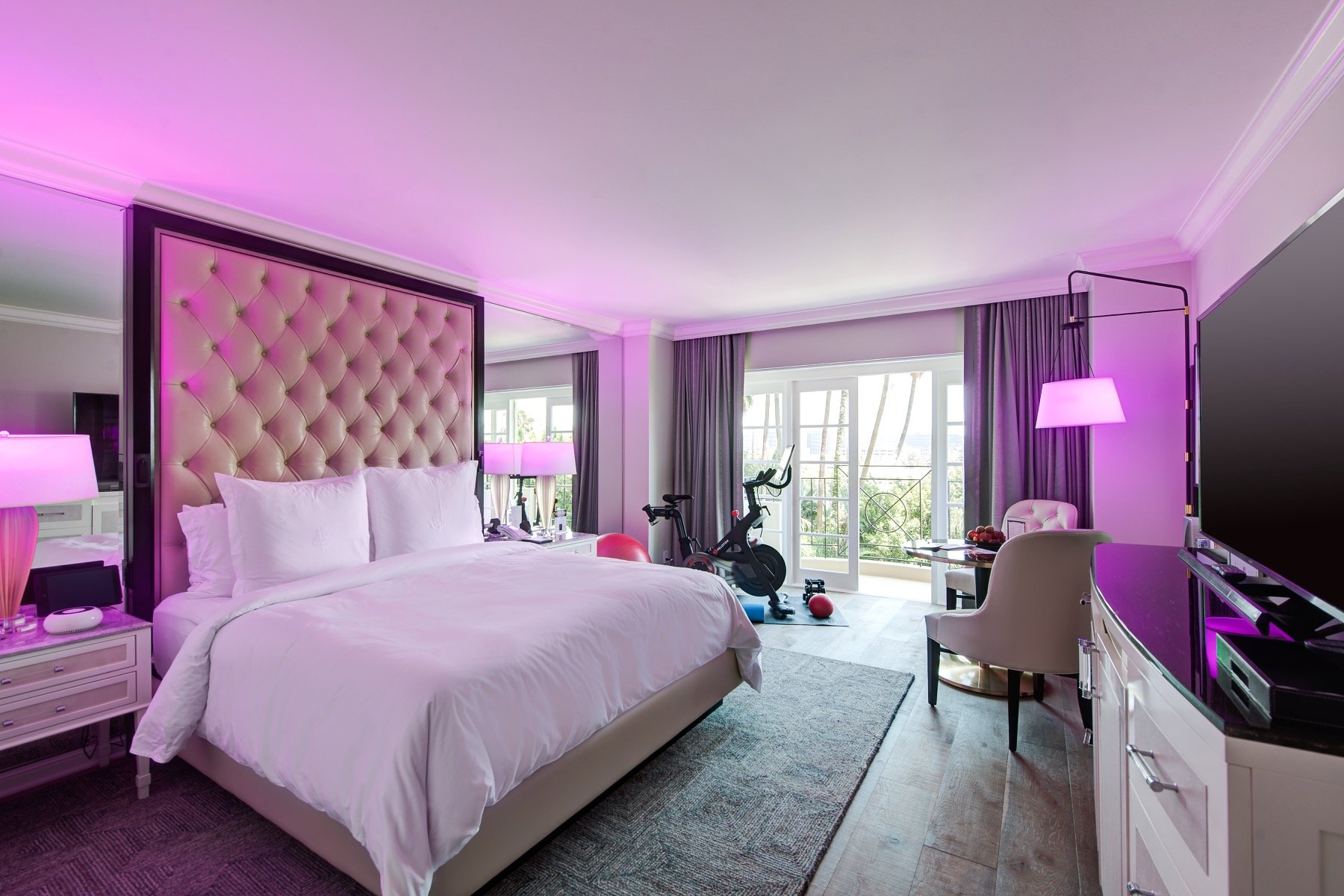
Four Seasons Hotel Los Angeles
The commercial proof is already in the room category
Look at the rate story side by side:
Four Seasons Hotel Los Angeles at Beverly Hills: Approximately $1,145 per night for its wellness floor experience.
Santa Monica Proper Hotel: Approximately $814 per night for upgraded wellness rooms.
Grand Wailea, Maui: Wellness rooms reportedly range from approximately $750 to more than $1,000 per night.
The strategic detail is especially important. Four Seasons did not begin by converting an entire floor. The hotel trialed one wellness room in 2017, as commercial director Jessica Tardif told Travel + Leisure, and then scaled after learning what guests wanted.
That is the playbook for an independent property.
Start with one to six keys. Track booking pace, ADR, length of stay, direct conversion, guest feedback, and repeat demand. Once the category demonstrates traction, expand it into a floor, a building, or a broader recovery ecosystem.
This is not primarily a wellness amenity decision. It is a room category decision.
The real sales lesson: sell the outcome, not the equipment
A wellness room gives you a differentiated product to place in your booking engine, your direct marketing, your sales collateral, and your repeat guest strategy.
Instead of selling “a king room with access to the spa,” you can sell:
A Sleep Reset Room for guests protecting their rest.
A Performance Recovery Suite for athletes, executives, and frequent travelers.
A Nervous System Reset Room for guests seeking quiet, decompression, and lower stimulation.
A Longevity Stay for guests who want movement, recovery, and nourishing rituals in one place.
That difference creates commercial leverage in five ways:
It gives your sales team a clear reason to upsell.
The upgrade is tied to a meaningful guest goal, not a vague collection of amenities.It creates a defensible premium.
Guests can compare standard room rates across OTAs, but a named, outcome-led category is harder to commoditize.It strengthens direct booking.
A signature room category gives your website something distinctive that Expedia, Hotels.com, and other channels cannot easily replicate.It supports repeat booking.
Guests who sleep well in a particular room category are more likely to request that category again.It anchors ancillary revenue.
Santa Monica Proper Hotel includes Proper Club access with its wellness rooms. A day pass otherwise costs approximately $295, creating a direct connection between the room category and a membership or local access product.
The picture is clear. The room is the product, and the wellness ecosystem increases its value.
What is actually inside a wellness suite?
The stack is more modular than many owners assume. The most common features include:
Temperature-controlled mattresses such as Eight Sleep.
Circadian-supporting lighting.
Air purification and water filtration.
White-noise machines and sunrise-simulation alarm clocks.
Blue-light blocking glasses.
Yoga mats, blocks, Pilates rings, and dumbbells.
Red-light therapy.
Compression boots and percussion tools.
Private or shared sauna and cold plunge access.
Sleep teas, supplements, and curated recovery rituals.
Most of these upgrades do not require clinical staffing, treatment rooms, or a full renovation. That is what makes the margin opportunity compelling.
The shift is also moving the wellness experience away from the treatment room and into the guest journey itself. Our post-spa era somatic suites post explores why the suite is becoming the place where guests regulate, restore, and reconnect with their bodies.
For an implementation reference, use the modular longevity playbook. The most effective first phase is usually a sequence of small, visible improvements rather than a single expensive intervention.
California benchmarks worth studying
Four Seasons Hotel Los Angeles at Beverly Hills
Four Seasons Hotel Los Angeles at Beverly Hills moved from a single wellness room trial in 2017 to a dedicated wellness floor connected to the spa, pool, and fitness center. The floor includes hypoallergenic hardwood flooring, water purification systems, circadian-adaptive lighting, yoga mats, and blocks. Travel + Leisure and the New York Post report an average rate of approximately $1,145 per night.
Why It Matters: Test one room before committing to a floor. The commercial learning comes before the capital investment.
Santa Monica Proper Hotel
Santa Monica Proper upgraded six standard rooms with Eight Sleep temperature-controlled mattresses, Filterbaby water filtration, Vitruvi diffusers, Loftie alarm clocks, and ROKA blue-light blocking glasses. The rooms reportedly sell for approximately $814 per night and include access to Proper Club, with cold plunges and saunas. The club also sells day passes for approximately $295.
Why It Matters: A small room cluster can support both ADR growth and a local membership or day-pass strategy.
Hotel Figueroa Los Angeles
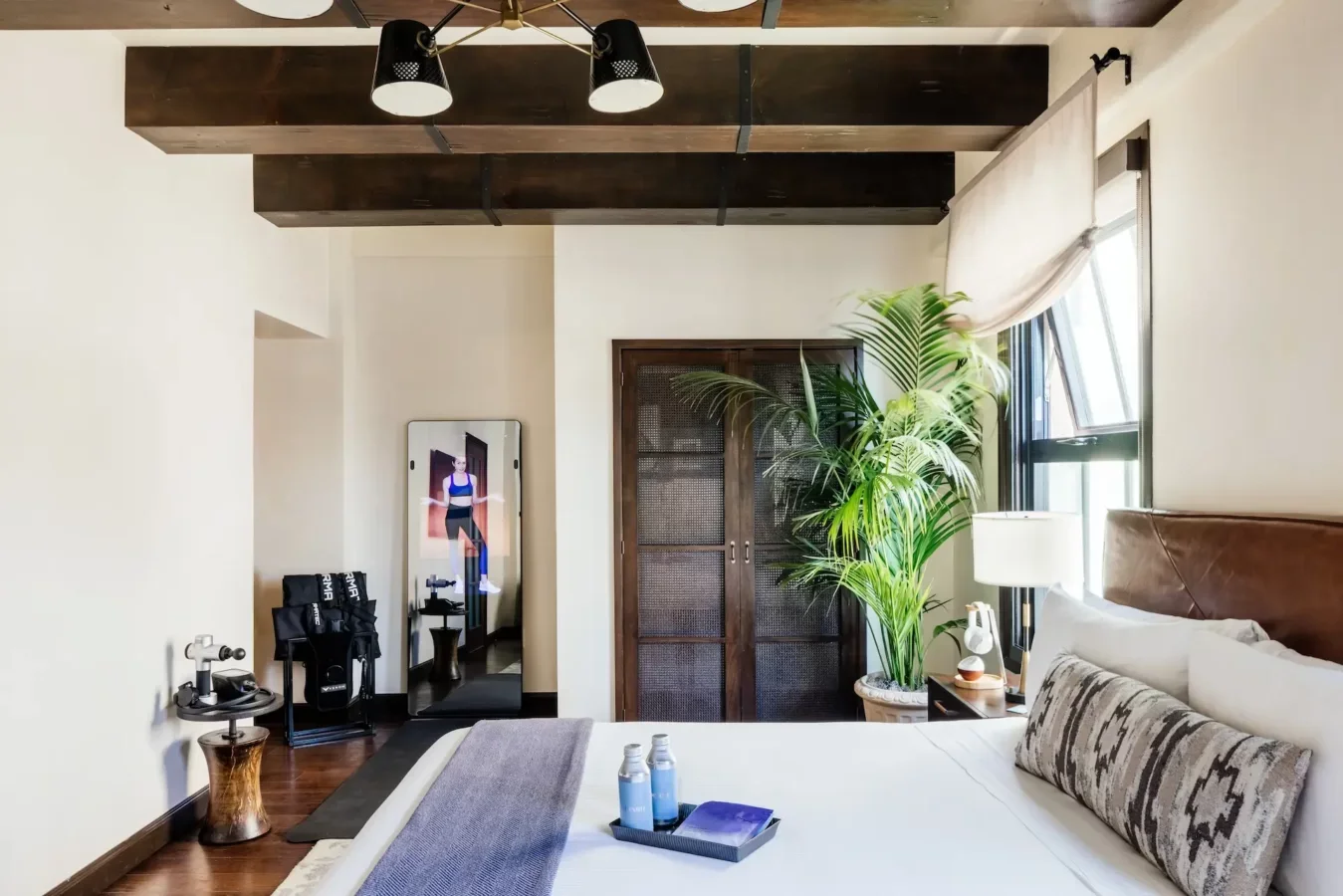
Hotel Figueroa’s Rest & Recovery Suite brings together Eight Sleep mattresses, Pluto pillows, FORME fitness equipment, circadian-supporting lighting, and sleep sticks. The concept fits the hotel’s distinctive cultural identity while giving guests a more functional reason to choose the suite.
Why It Matters: Wellness does not need to look clinical. Design, culture, and recovery can coexist in a highly individual room category.
Hotel Figueroa
Carneros Resort and Spa, Napa Valley
Carneros Resort and Spa offers a Wellness Suite with a Bryte Balance smart bed, private sauna, cold plunge, and vitamin C shower heads. The private cottage format allows the resort to connect sleep technology with outdoor thermal rituals and Napa’s slower pace.
Why It Matters: Properties with cottages, patios, or private outdoor space can create a premium micro-spa without adding a traditional spa building.
Rancho Valencia Resort and Spa
Rancho Valencia packages Therabody recovery technology, including compression boots and percussion tools, through its Valencia Reset Package. The resort’s broader wellness infrastructure gives the technology context and makes the stay feel curated rather than transactional.
Why It Matters: Equipment sells better when it is attached to a defined reset itinerary, not placed in a room without guidance.
Nobu Hotel Palo Alto
Nobu Hotel Palo Alto’s Ryokan Reset Package includes HigherDOSE red-light therapy masks alongside the property’s Japanese-inspired Ryokan accommodations. The offer speaks directly to Silicon Valley guests who want to recover without stepping away from a high-performance lifestyle.
Why It Matters: The strongest wellness packages reflect the mindset of the destination and the guest, rather than copying a generic spa menu.
Grand Wailea, Maui
Grand Wailea introduced wellness rooms in 2024 with Therabody compression boots, a Theragun massage device, meditation goggles, air purification, white-noise tools, and a Technogym Movement Kit. Rates range from approximately $750 to more than $1,000. Managing director J. P. Oliver told Travel + Leisure, “Well-being is becoming part of the core guest experience, rather than an added amenity.”
Why It Matters: A major resort has validated the category, but an independent property can make the experience more specific and personal.
Lake Tahoe Proper
The upcoming Lake Tahoe Proper at the Cal Neva site is the scale play, with 50,000 square feet dedicated solely to wellness. Plans include a spa, indoor pool, hydrotherapy, three padel courts, and a freestanding pickleball building.
Why It Matters: Large-scale wellness infrastructure will attract attention, but it also creates a clear opening for independent hotels to win through intimacy, specificity, and human delivery.
The brands are coming, so independents should move now
Hilton’s Signia Restore is scheduled to launch in January 2027, bringing fitness, recovery technology, wellness retail, and guided support into a branded hotel environment. JW Marriott already offers Mindful Rooms and Suites across its global portfolio, with yoga accessories, Pilates rings, dumbbells, massage guns, crystal singing bowls, and take-home mindfulness journals. Boston’s new Dagny hotel has placed a Peloton bike in every wellness room.
When recovery amenities become a brand standard, the equipment stops being the differentiator.
The differentiator becomes the specificity of the outcome, the quality of the programming, and the way your team delivers the experience.
Have you ever worked in a hotel? Then you know the difference between a room that contains an amenity and a room that has been operationally designed around a guest need. A compression boot in a closet is not a recovery experience. A sleep kit without staff confidence is not a sleep product. A cold plunge without sequencing, safety, and clear communication is not a signature experience.
Our nervous system regulation commercial playbook shows how to move from equipment to outcome-led programming.
Revenue ideas for hotels
Here are five bookable moves you can activate without waiting for a major renovation:
Create a named wellness room category tier.
Start with three to six keys and position the category around sleep, recovery, or nervous system regulation.Build a reset package around one outcome.
Sell a “Deep Sleep Reset,” “Post-Flight Recovery,” or “Executive Decompression” package instead of combining unrelated amenities.Offer a local day pass or membership.
Target high-performing local professionals with access to a sauna, cold plunge, movement studio, or recovery suite.Add a recovery bundle during booking.
Offer compression boots, red-light therapy, a sleep ritual, or a guided morning movement session as an easy pre-arrival upgrade.Retail the products guests slept on.
Create a take-home sleep and recovery shop featuring the mattress technology, eye masks, teas, recovery tools, or lighting products used in the room.
Audit-style opportunities we often see
In our hotel wellness ROI audits, several opportunities appear repeatedly:
The best acoustically separated keys are not always the first rooms converted. Choose rooms away from elevators, service corridors, nightlife, and mechanical noise.
The minibar and in-room coffee station are underused commercial assets. Replace generic snacks with hydration, sleep support, mineral water, tea, and recovery-friendly nourishment.
Properties buy equipment but do not merchandise it. If guests cannot understand what a device does, when to use it, or how to add it to their stay, it will not drive revenue.
The booking engine hides the category. A wellness room needs its own photography, room description, upgrade path, and direct-booking language.
The fastest path is not to build a spa. It is to give a handful of rooms a reason to command more.
Who monetizes it first?
The window is open, but it will not stay open indefinitely.
Wellness suites are moving from experimental room type to recognized commercial category. The question is no longer whether guests will pay for recovery hospitality. California operators have already demonstrated that they will.
The question is: who monetizes it first in your market?
At Elevate Hospitality Collective, we help owners and operators identify the right keys, define the outcome, build the room category, and connect the guest experience to ADR, ancillary spend, direct booking, and repeat demand. Explore our hospitality advisory services or begin with a focused wellness room opportunity review.
The first property to make the category clear will
